
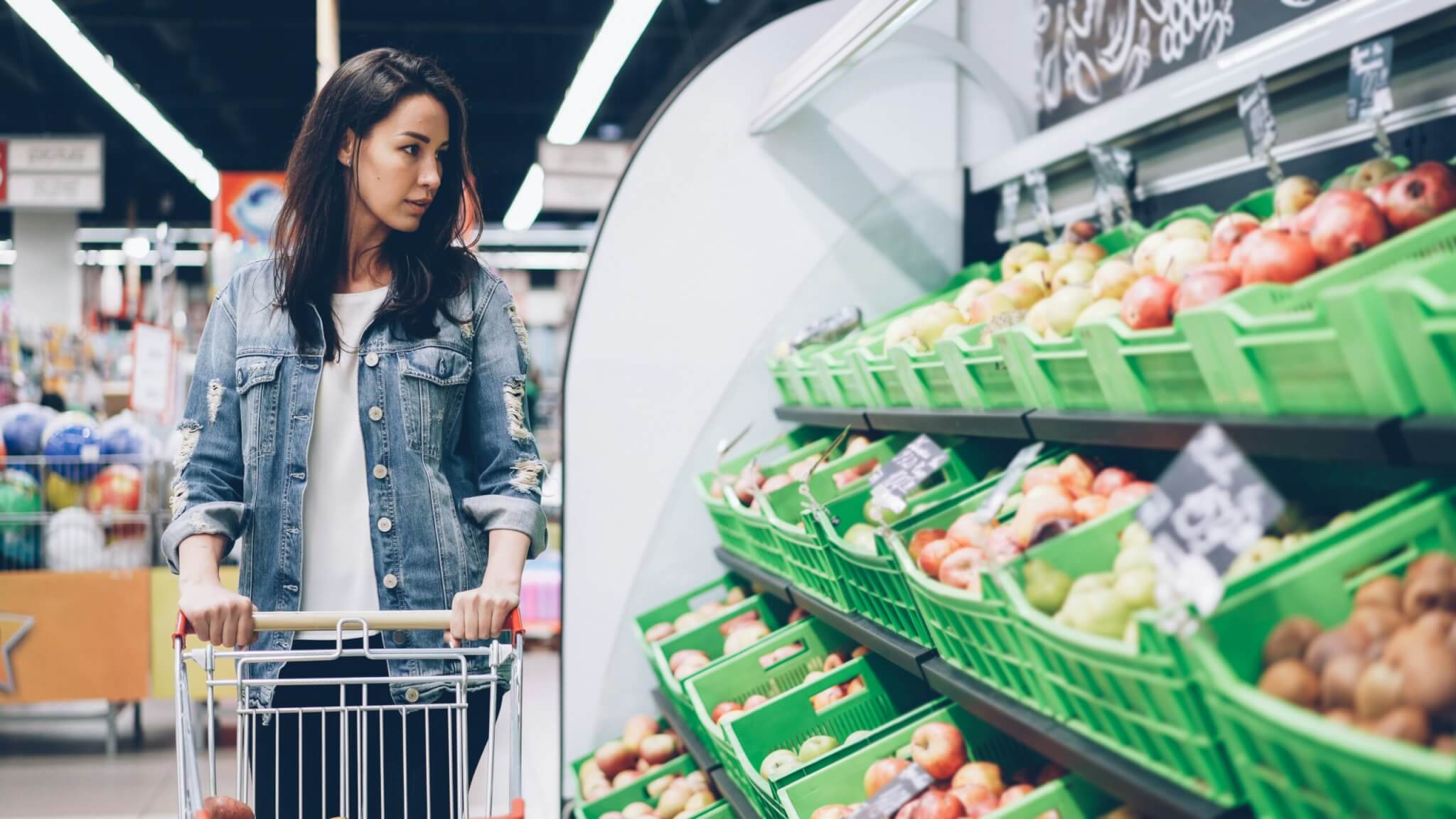
Last year, overall sales of organic produce and products increased by 4.2% to £3.9bn. The major driver of this growth was within supermarkets, where there was a sales uplift of 7%. Organic also outpaced non-organic, with the unit growth of organic in supermarkets four times that of non-organic.
And yet, the likes of Tesco, Waitrose, Aldi, Asda, and Sainsbury’s could still be under-selling organic food and drink. And at a time when the issue of rising chemical pesticide residues on everything from berries and beef to wine and whisky is making headlines and the public is, increasingly, paying attention and calling it out.
“I wonder if retailers are operating under the assumption that organics are luxury goods [and/or] purchased by higher-income consumers, and thus aren’t willing to price promote them?” asks Alexandra Sadler, senior research officer at the Arise project, University of Essex.
In September, Sadler, when based at the University of Edinburgh as part of the Global Academy of Agriculture and Food Security, published research that dug into the availability, price, and marketing of organic food and drink. Together with colleagues from India and Brazil, she wanted to determine why demand for organic food remains low (relative to non-organic food), despite all their potential positive attributes – environmentally, socially and economically.
They selected three countries – Brazil, the UK and India – with a diverse set of regions and income levels, and then a large-, medium- and small-sized city in each of them (London, Birmingham and Edinburgh were chosen in the UK). Then they selected higher-, middle- and lower-income neighbourhoods in each city, and a sampling area with a 0.5km radius centred on the midpoint of each area.
They visited all shops in the area – from large supermarket chains to local markets and mobile vendors – that sold any of the 14 products they were assessing: bananas, chickpeas, coffee, (wheat) flour, fruit juice, green leafy vegetables, lentils, mangos, milk, millets, nuts, rice, tea, and tomatoes. These provided a range of categories, as well as local and exported products.
Data from all but a handful of the 808 businesses the academics went to was collected and fed into “an organic food environment assessment tool” that evaluated the availability, price, vendor and marketing characteristics of organic foods in urban environments. This is something that, as far as the experts were aware, no-one else had done before.
Price premium
“I was surprised by the low proportion of discounted organic products we found,” Sadler tells Wicked Leeks. “Because we didn’t collect data on the proportion of conventional products with a discount, we can’t really directly compare, but the absence of discounts – in addition to the ‘two times’ price premium – adds to existing concerns about the affordability of organic products,” she adds.
Indeed, only 8% of organic products used a price promotion. In the UK, the figure was slightly higher (9%). Organic rice was around double the price of conventional rice, “posing a barrier to consumers”, the experts wrote in their paper for the journal, Frontiers in Sustainable Food Systems.
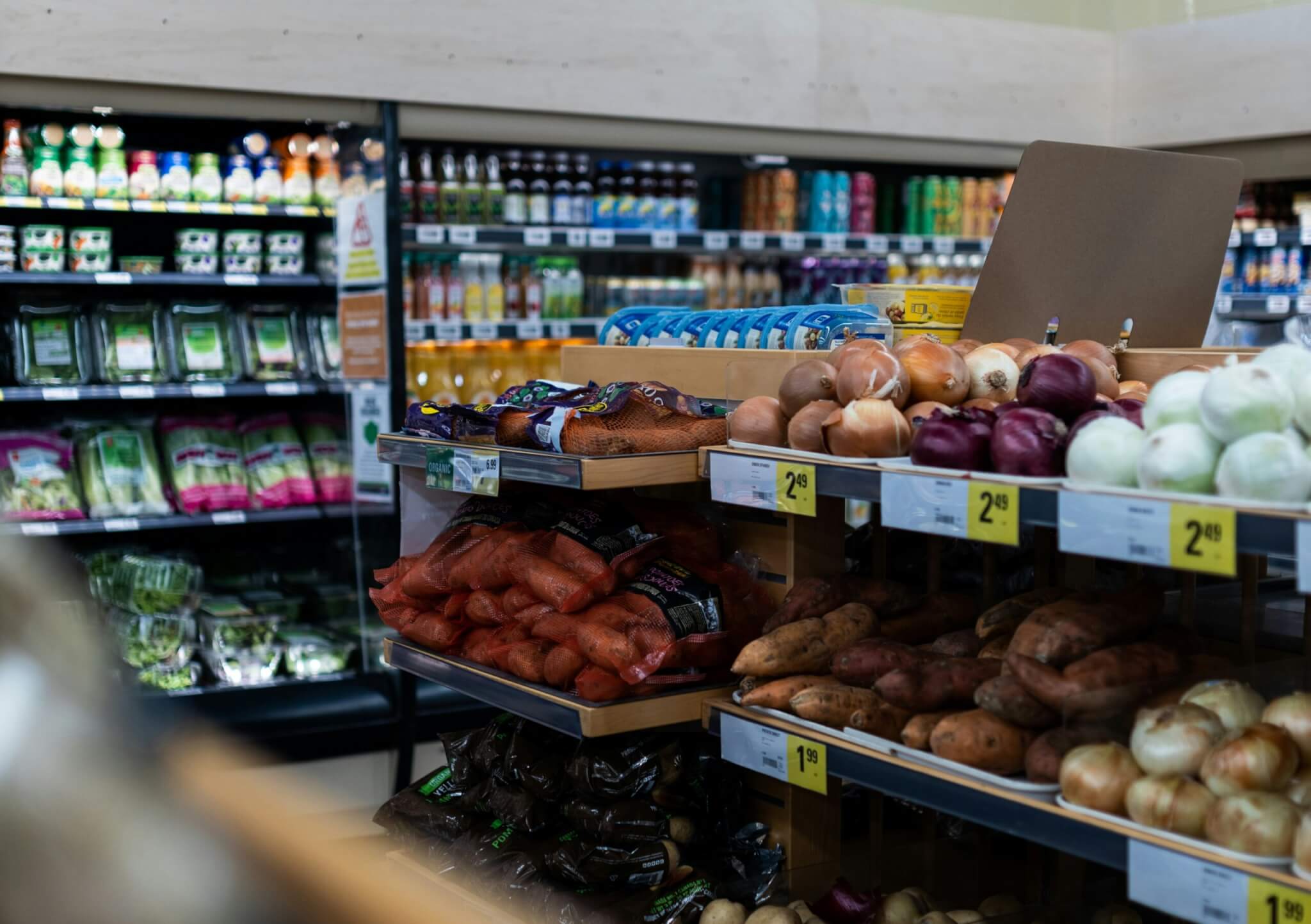
More than half (59%) the shops visited in the UK cities sold at least one of the 14 organic products, and most of the organic foods and drinks were mixed in with conventional ones. They weren’t exactly in the spotlight: “Organic products were predominantly positioned in the middle of the store (52% of all organic products), with only 17% in a position of prominence at the front,” the experts noted.
Marketing of the products took a number of forms, from health, quality and taste to more abstract ones like the environment and social justice. This perhaps explains some of the confusion that still surrounds organic, says Sadler. One of the findings that proved particularly interesting was that organic products in India “heavily emphasise” the health benefits of the products (as a result of their pesticide/chemical-free status), while the marketing of organic products in the UK was less health-focused.
Some scholars would argue that there is not yet strong enough evidence for some health claims. Sadler says care needs to be taken given the strict regulations around health claims in the UK, for example. However, she believes “substantial evidence” exists that: (1) some pesticides are bad for human health (proven linkages to some cancers, as well as to diabetes, neurodevelopment issues for children, for example); (2) switching to organic reduces exposure to these pesticides; and (3) that organic therefore has some health benefits.
A healthy debate
Knowledge about specific health benefits was also “very low” so would boosting consumer understanding help to incentivise higher organic purchases?
“I certainly think organic brands and certification bodies could do more to promote the benefits of these products and to clarify terminologies,” says Sadler. “There are quite a lot of papers that have shown that consumers are confused about the meaning of the term organic when compared to terms such natural/pesticide-free, and so on.”
This could also help smooth out some of the other perceptions people have of organic. For example, organic foods can come with fewer ingredients, but there is some concern that organic logos may offer an unfair health halo when it comes to the case of ultra-processed foods.
Sadler explains that some of us “may inherently perceive organic products to be healthier than non-organic, even in less healthy food categories. For example, a couple of studies have shown that consumers viewed organic cookies to be lower in calories than non-organic cookies and thus viewed them as able to be eaten more frequently,” she adds.
Still, the opportunity for organic is there if we really want to choose healthy, sustainable diets, and the resilient, regenerative and chemical-free farming systems that can provide them.
Sadler explains: “If there’s more of an emphasis on buying organic fruit and vegetables in particular (which tend to have the highest pesticide residues anyway), then shifting to organics could be part of broader transitions towards healthier and more unprocessed diets, especially if it’s paired with an emphasis on sourcing from local organic producers, like veggie box schemes and community-supported agriculture.”
Whether supermarkets, big food manufacturers and politicians are as keen to embrace this as they say they are, is debatable. Sadler and her team talk of multi-stakeholder efforts – including public, private, and civil society actors – to develop and implement a sector-wide strategy for organic and other sustainably farmed products.
“I think Denmark presents an interesting (and successful) example of a coordinated public-private sector effort to help consumers understand clearly the benefits of organics, to build trust, and to boost the market for these products, including through public information campaigns,” says Sadler.
Indeed, Denmark now has the highest domestic organic market share: organics comprise 12% of the total Danish market, versus the UK’s 1.4%. Which is where our conversation turns back to affordability and to the ‘true cost of food’.
Sadler points to “structural reasons” for the price difference (beyond adequately compensating farmers for the value addition of more sustainable and safe products), including “very imbalanced incentives provided to chemical-based farming versus chemical-free farming”. This is particularly stark in India, she explains, where the government is currently spending “100 times more on synthetic fertiliser subsidies to the chemical industry than they do on subsidising organic inputs (they are also spending more on fertiliser subsidies than they do on healthcare and education).”
In the UK, supermarkets have, finally, begun to buy into organics. Sainsbury’s sells over 800 organic products, Tesco has revamped its 100 or so organic lines, citing that “quality, great‑tasting organic food really matters” to customers, whilst Waitrose expanded its Duchy range to 250 products. But these are nibbles rather than bites. What’s more, supply, as Wicked Leeks reported in March, is struggling to match demand, with too much reliance on imports. Climate change continues to batter farmers both here and overseas, serving up repeated reminders that the status quo of food production is on ever-shakier ground.
“I believe that safe, sustainable, healthy food options should be available to all, regardless of income level, and I don’t think the onus should be on the consumer to pay double the price,” says Sadler.

I know for some people price is of importance to them. But to me soil, river pollution, bio-diversity and care for our world is of importance. Should I buy a fruit and veg box that’s not organic?
If I have to weigh up a bottle of wine, flying off to a foreign holiday a new shirt, smaller car etc I’d always go for the organic fruit and veg box
I am often disappointed that in supermarkets the organic veg is alongside the non organic but the organic has more plastic wrapping and less likely to be loose. I think this is particularly true of dutchy products. I tend to go for less packaging.