
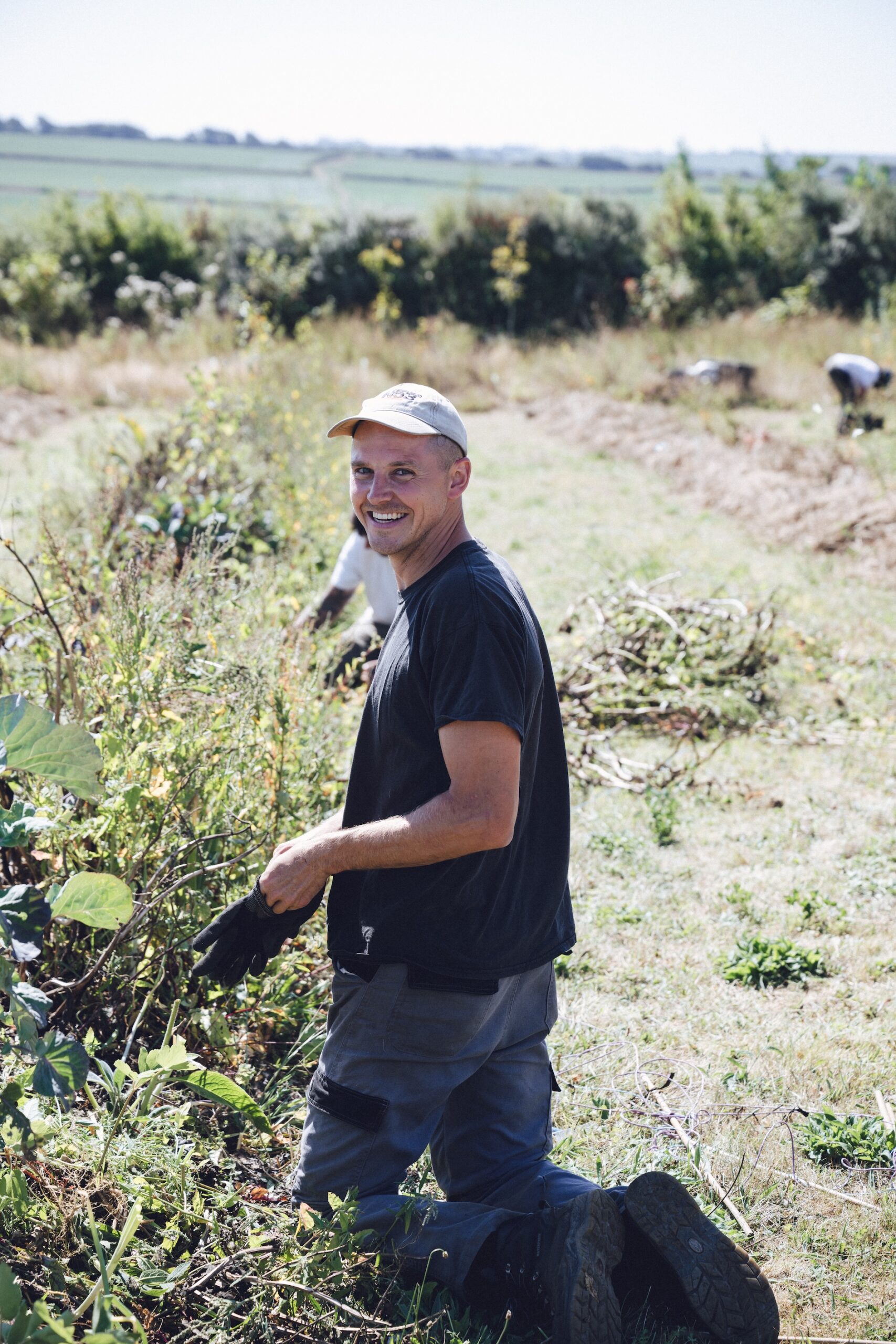
There is a lot of talk about what a transition towards a just and resilient food system should look like, but all too few people in the UK walking their talk. Jack Feeny, however, is one of them. This unusual chef and grower is trying to redefine what is on tomorrow’s menu, today. Reimagining what we grow, cook and serve up, as well as the ingredients we use to do it.
This involves using more perennials, diverse grains and pulses, deploying wild meats and invasive species, and encompassing the true constraints of British seasonality. Then there is the reduction of single use plastic, slashing food waste, and using local produce. Jack has them all in the crosshairs in his mission to shift the dial on sustainability.
“The United Nations calls chefs ‘agents of change,’ because they play a pivotal role in the food system, particularly when it comes to sourcing. The biggest impact they can have is what they put on their menus. Chefs definitely shape food trends up and down the country. If we want dietary change, they should be the first to act,” explains Feeny.
He continues: “Chefs are the ones that have the buying power in the UK to support better practices, such as agroecological and organic growing. More so than the wider public, who are struggling to do so because of the cost-of-living crisis.”
The penny dropped for Jack when he worked in kitchens as a professional chef for eight years in London with stints at the Conduit in Covent Garden and the now-closed Pidgin in Hackney. He also worked at Riverford Field Kitchen.
It was the amount of food waste and the excessive use of plastic in restaurants in general – particularly single use items – that spurred him on to act. He soon realised how easy it was to make changes.
When Jack was on furlough during the global pandemic and the restaurant trade shut up shop, he spent time creating an online manual of practical ideas to help chefs eliminate certain plastic products and minimise waste. It was based on his own learnings and surveying others who worked in kitchens around the world.
‘No Mise En Plastic’ was then born on the Internet and social media. It is a play on words. ‘Mise en place’ is the French phrase for ‘everything in its place.’ The term is used in professional kitchens for the practice of prepping, organising, and setting up ingredients and tools before service kicks off.
The power of frugal innovation
The free online manual is now five years old covering a wide range of strategies and tips focused on food waste, vacuum packing, disposable gloves, piping bags and many other topics. There has also been a campaign to move over to wooden chopping boards which dispels myths around food hygiene and contamination (plastic chopping boards, on the other hand, are an oft-overlooked source of microplastics in our food).
“I felt if other chefs knew about how easy it was to ditch plastic or slash waste they would. I also knew that many chefs were already doing things, particularly around food waste because it has a direct impact on their profit margins. However, most people who work in commercial kitchens don’t have the time to research or share their ideas,” states Feeny.
Jack realised that if he presented all of the food waste ingredients that time-poor chefs could use with confidence in easy recipes, this could be a gamechanger.
This is when Tommorrow’s Kitchen was born, a community interest company focused on sharing this knowledge through hacks, innovative ideas, inspirational stories and get-togethers.
“I received so many incredible and innovative recipes such as the Brazilian chef who made kimchi from leek and cauliflower trims while another chef who used leftover herbs to make an amazing ferment. Then there was the Australian cook who turned fish bones into noodles, and Italian chefs who used up leftover bread to make gnocchi, pasta, and vinegars. The whole thing then snowballed.”
The aim is also to help UK-based chefs connect with local farmers and transition to more sustainable and agroecological production. It platforms Today’s Menu, a free resource that promotes the ideas of food systems experts on these issues. It also offers recipes, interviews and practical tips.
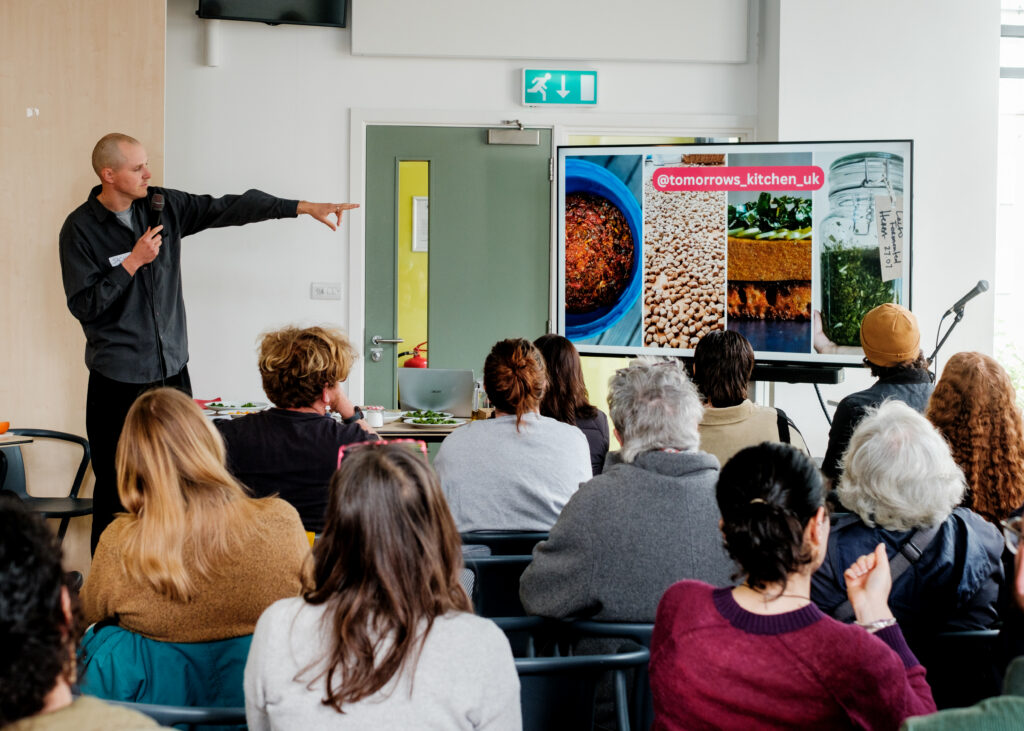
“Chefs need to know that if they start using food waste, connect directly with local growers or choose seasonal British produce over imported food items, they are helping support a transition to a better food system. This is something really powerful. However, through this process chefs need to be more flexible and innovative.”
Jack runs workshops with chefs from all walks of life, including catering colleges and independent restaurants. He’s also worked with TV chef Marcus Wareing and his culinary training initiatives, as well as public facing seminars.
In Feeny’s workshops chefs are asked to ‘Ready Steady Cook,’ like the television show, and produce a menu as well as a meal, where they can only use agroecological and seasonal ingredients. Those cooks who are able to innovate in a frugal and agile way, win – but it is these constraints that reflect true reality, not the everlasting spring of the supermarket shelves and global, unsustainable supply chains.
“Limitations breed creativity and that is what is exciting. This is when chefs come up with really cool ideas!” enthuses Jack.
He continues: “We must support farmers who are struggling to grow things that provide real resilience to their land and soil. With a changing climate the crops that will thrive in the UK are evolving. We need to take those ingredients and use our cheffing skills to cook things that have great flavour, that people really want to eat,” details Feeny.
A move to regenerative
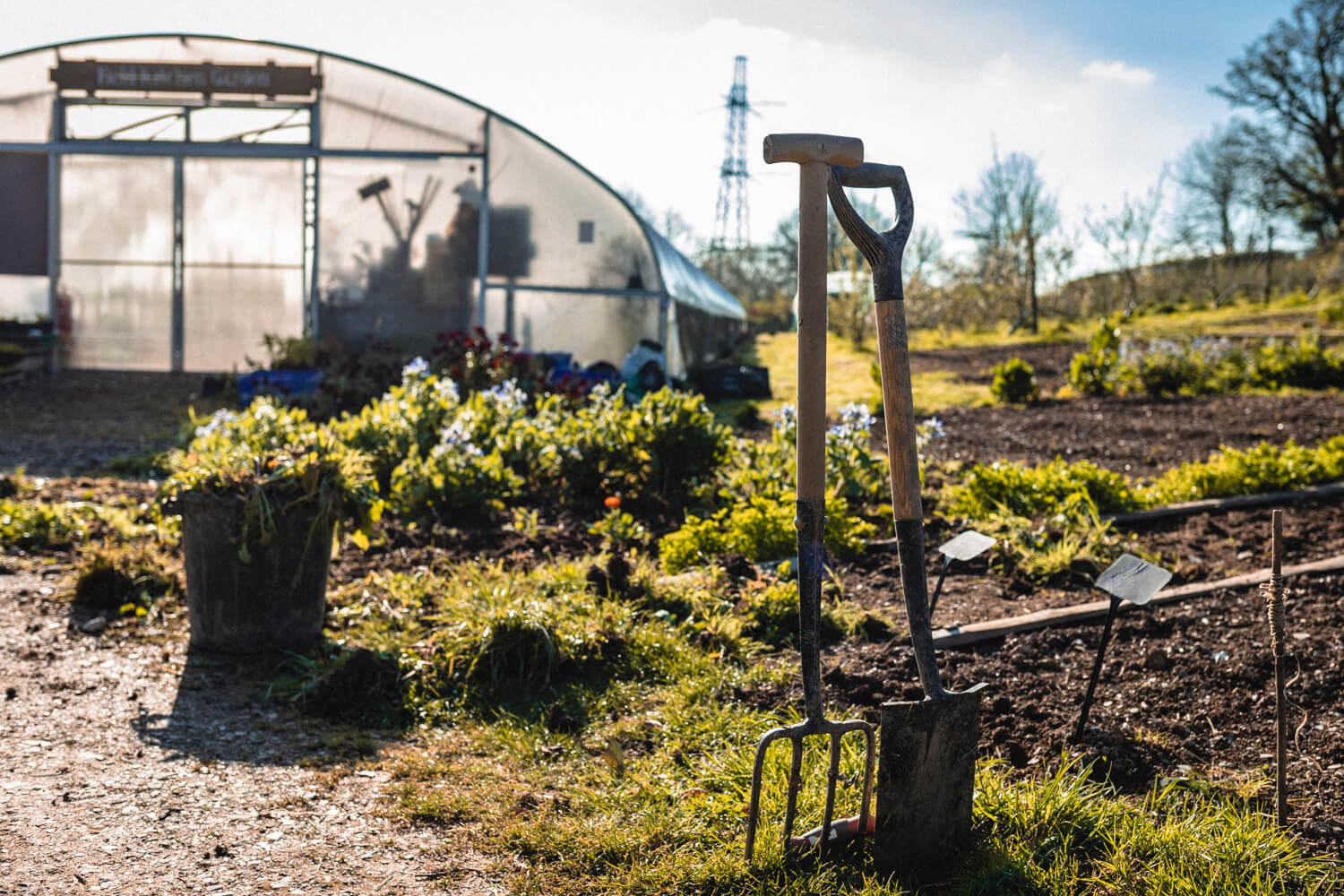
Jack is now living and working on Birch Farm, which is part of the Woolsery Collective, in North Devon. This is a pioneering 150-acre organic farm which works closely with a nearby pub. Created by Josh Sparks and his team, it deploys syntropic agriculture – a regenerative farming system that mimics natural forest ecosystems.
“I’ve been here about three years now. At Birch Farm it is all about how we can find resilient ways of growing through agroforestry and food forests, deploying mass diversity. We need to rely less on annuals and more on polycultures and perennials. It means there is no hunger gap and more resilience to the droughts and extreme weather we’ve been facing,” he explains.
What you realise listening to Jack Feeny is that he is a truly unusual chef and changemaker in the food and farming system. He’s not only questioning what we grow, what we cook and what we eat, but he’s also coming up with solutions. “Tomorrow’s Kitchen”, then, is certainly an apt and worthy name for this visionary young man’s mission.




0 Comments