

If you’re a regular reader of Wicked Leeks, or interested in UK Food policy, you have likely heard of Tim Lang. Lang founded City University of London’s Centre for Food Policy in 1994, spent seven years as a hill farmer, and four decades researching and talking about the food system. Latterly, the Professor Emeritus has been busier than ever. Food – its cost, procurement and the inequalities embedded in how it arrives on our plates – has risen up the agenda. Now, he argues, is certainly time for action.
His 2020 book Feeding Britain: Our Food Problems and How to Fix Them landed just as the first wave of Covid-19 broke across British shores. I’d seen him talk a few years back at Groundswell Festival, arguing persuasively for a renewed focus on British horticulture. But his latest project has garnered the most attention yet: a report he wrote for the National Preparedness Commission called Just in Case: 7 steps to narrow the UK civil food resilience gap.
Understandably, it has captured the zeitgeist. The day before we speak there was a one-day conference for it in Lincoln, Tim’s home county. And as the Middle East war threatens to take food prices to new levels, downloads of his report have continued to climb upwards.
Lang’s report asks what would happen if the status quo were disrupted i.e. if our just-in-time, complex and highly centralised food system came under serious pressure. It also asks how prepared the British are for food shocks and suggests what to do about it.
Systemic silence
“When the National Preparedness Commission approached me, I was retired and I thought this would be something I could do in a year. It took me two and a half years and was some of the most intense work I’ve done in my entire life, including my PhD, 55 years ago,” Tim laughs.
He interviewed around 80 food industry people anonymously for his report, as well as researching 10 other countries. As he says, he’s a “policy man”, so he also looked at our existing state infrastructure. The UK has an official Government Resilience Framework but, as he writes, ‘this has next to no focus on either food or the role of the public in civil food resilience’.
This silence on food is a common theme – take the Agriculture Act 2020 and the Environment Act 2021. As he writes: “One could read those Acts and infer that the main point of land is protection of nature – as though food production cannot be woven into nature protection, and as though nature protection does not provide security and sustainability for food.”
Interviewees said we have a complacent culture; Tim describes it as an ‘imperial hangover’. Britain got used to being fed by its empire, and more latterly, Europe. After leaving the EU, nearly one third of our food still comes from it. The UK sources 60% of its food from domestic production, but just 15% of fresh fruit and 53% of vegetables [Source: Defra]
“By the 1900s, Britain was only producing 30% of its own food and was being fed basically by its empire,” he explains. “World War I was a shock to that and nearly disrupted it. In World War II, Britain increased its output from 30% of supplies to 60% in war, in very dire circumstances, and built 21,000 school meals kitchens and did extraordinary things. Why? Because if you want the public to support you, you’ve got to feed them.”
Time for action
The Climate Change Committee recently released a major report calling for urgent changes for the UK to survive global heating. Tim would like to see an equivalent for food: “I think we should have a Council of Food Security and Resilience, which has insiders and outsiders providing regular advice like the Climate Change Committee.”
The interplay between food and climate will only become clearer. In this ‘climate change world’ of poly-crises he calls for a new coherent UK food policy to transform our food system: for a new Food Security and Resilience Act.
“A theme from the report is that we need more diversity. We have too concentrated a food system in every sector: farming, retailing, manufacturing, distribution, logistics – it’s all concentrated.
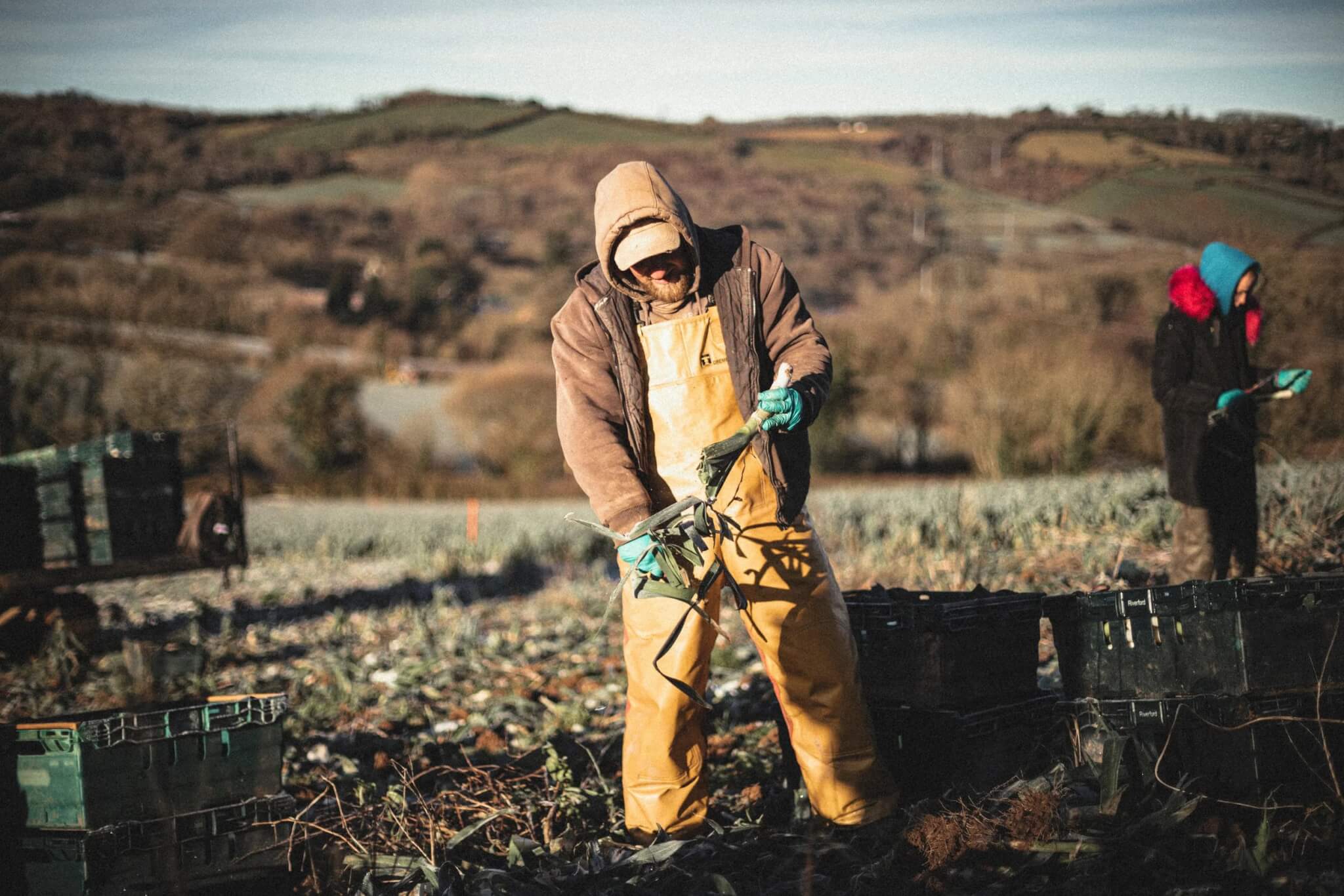
“We need regional Riverfords. When I talked with mayors, with regional bodies and people working in local authorities, they’re acutely aware of that, but they say we have no powers, no funding to do that. What needs to happen? One of the things we need is a new act that provides the powers. We did it in the 1860s to sort out food adulteration and quality. We did it in the 1990s with food safety. We need to do it now for food security and resilience.”
There are lessons to draw from places such as Liège in Belgium, which has reinvigorated peri-urban agriculture to supply its schools and restaurants – building shorter supply routes and less dominance on big, centralised suppliers.
He proposes that Civil Food Resilience Committees should be formed at local level where they could work with existing Local Resilience Forums (official bodies set up under the Civil Contingencies Act – the ‘blue light brigades’). It’s a plan of building connections and drawing on expertise, vital in a crisis.
We can’t do it alone
The first piece of academic research Tim carried out on food policy was in 1980 – a big survey of 1,000 people living on low incomes in the north of England during an economic depression. It stuck with him. “People said, we know the cost of everything, and we know we should be eating differently, but we have to be driven by the cost because food is the flexible item in our budgets, left after all the fixed costs are taken. People in food banks are still saying the same now.”
It’s led him to ponder how we can achieve common good in an unequal society. It can’t just be down to the individual to be ‘prepared’ – as he says, stockpiling food is expensive.
What we need, as well as government action, is an unleashing of creativity and collaboration. “Empowering doesn’t come from individuals, it’s about working with other people. You can’t sort it yourself. We have great civil society in Britain – citizens assemblies, action groups, and councils. They just need to be pulled together.”
Back to earth
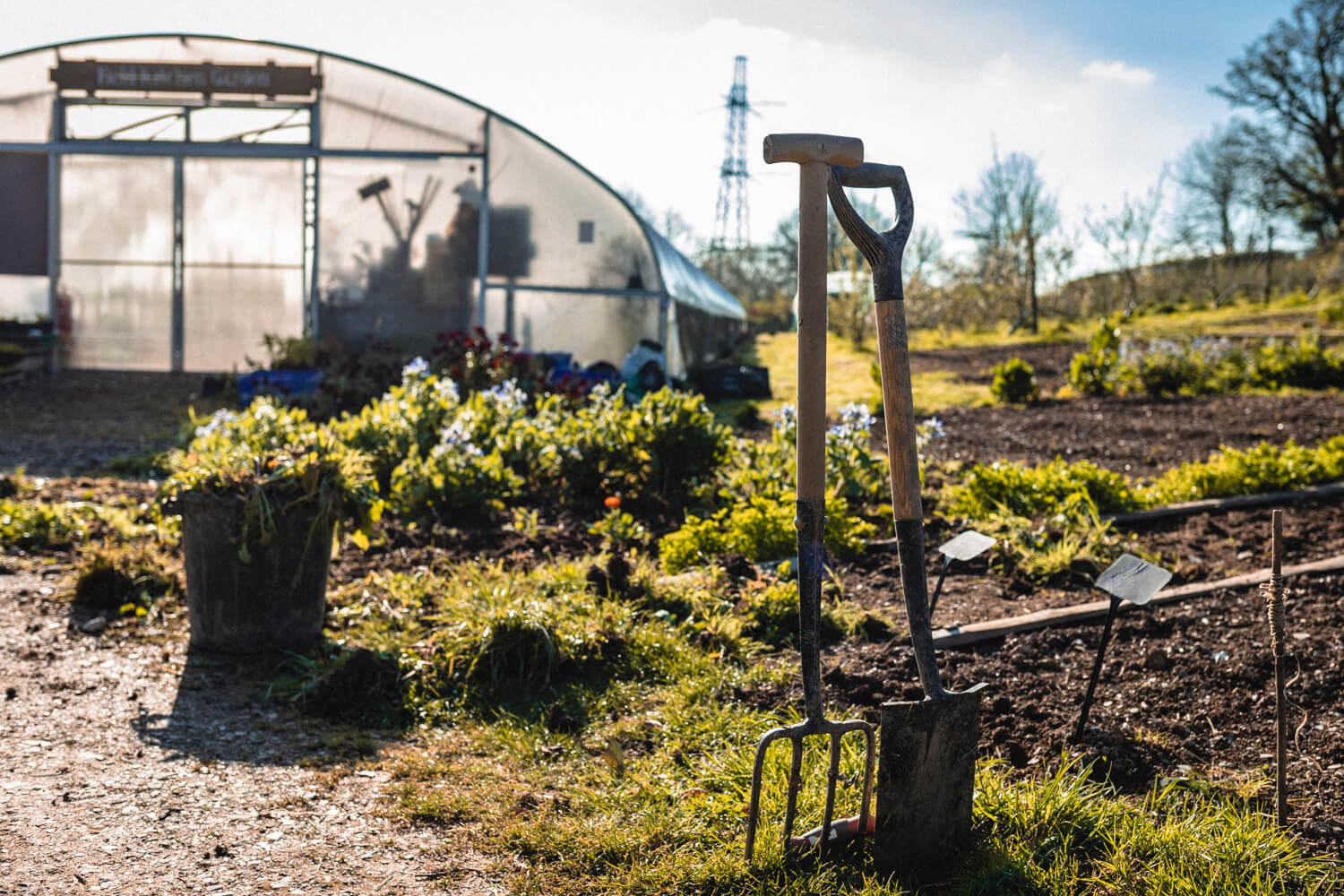
Tim cites a nutritionist who studied how people fed themselves during the Yugoslavian war. They were getting up in the dark to tend their gardens in dire circumstances. Food really mattered. Gardening matters.
“Gardening makes people feel good. It can provide a little strand of food that you otherwise don’t get and your labour is free,” he says.
An amendment to the 1950s Allotments Act could help the public access food-growing land with a Right to Grow on unused public land or private land awaiting development, he suggests.
“There is a thirst and lots of young people are interested – maybe that should be part of education programmes. All of that I point to, so I’m very hopeful.”
These days, he’s being careful how he spends his time – as one, retired professor he says he has a limit. But he does want Wicked Leeks readers to take heart: “Engage with your MP, talk to others, if you have local food networks, ask about setting up shops, ask the county council. Is your town council engaged with our city council? Read my report. Good people are getting together.”

0 Comments