
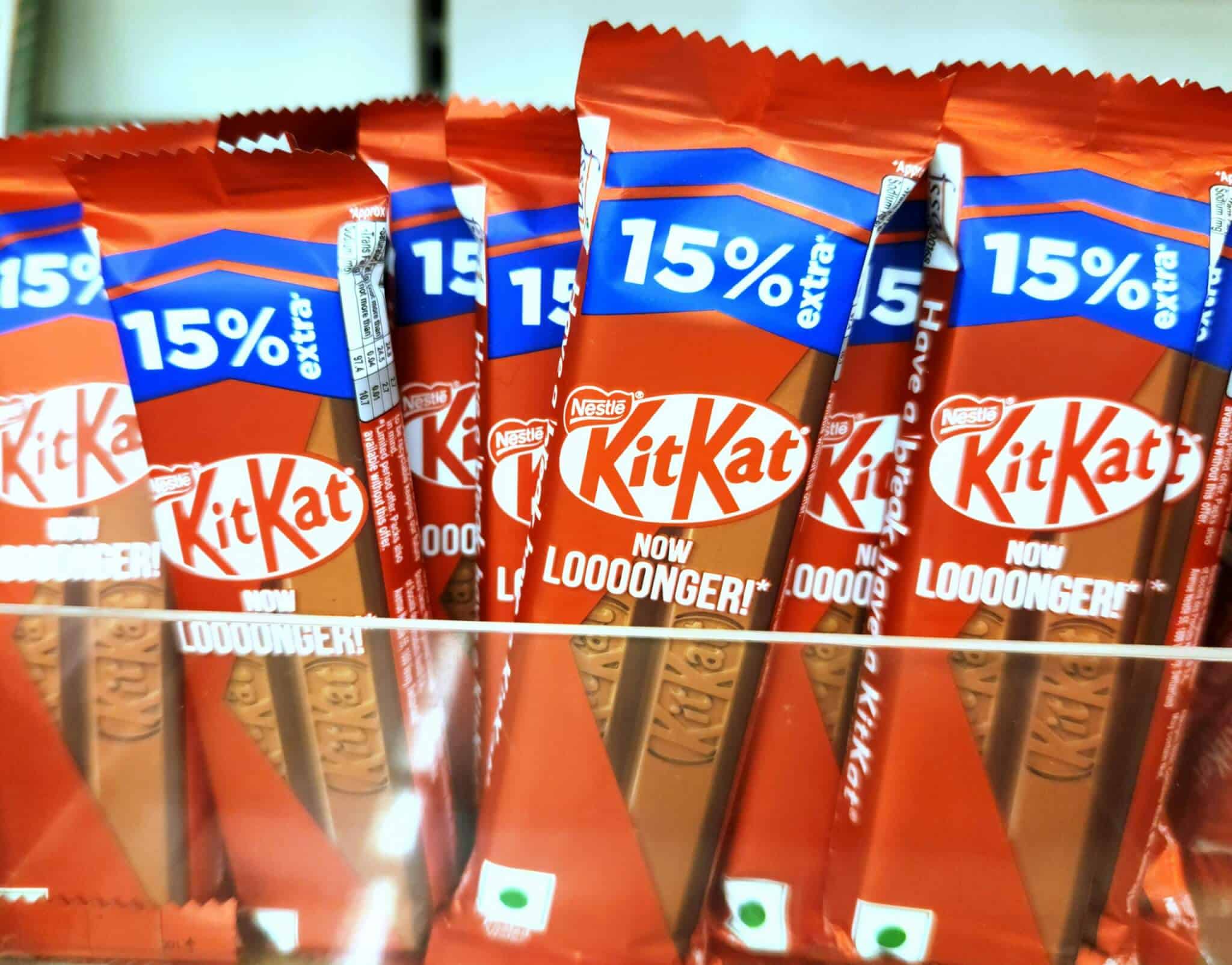
Nestlé is teaming up with regenerative food and farming brand Wildfarmed – working with a community of British farmers to trial regeneratively farmed wheat in one of its most famous brands. The wheat comes from Wildfarmed’s community of British farmers who “all follow a set of standards based on holistic farming practices aimed at reducing environmental impact and bringing life back to soil”, said Nestlé, the world’s largest food company, in a press statement.
“We’re thrilled to be working with Wildfarmed,” said Emma Keller, head of sustainability at Nestlé UK and Ireland, and former Head of Food and Commodities at WWF-UK. This collaboration is all about making products “in an even more sustainable way, all while supporting British wheat farmers to adopt regenerative farming practices that are intended to support carbon reduction and increase biodiversity. With this partnership, it’s not just about growing crops a bit differently; it’s about working to grow and support a more sustainable future for farmers and the landscapes we depend on.”
This all sounds great, doesn’t it?
Love it or hate it, Nestlé is one of the food companies keenest to plough millions into scaling regenerative practices. The company’s sales are not in great shape, and the infant formula situation (a voluntary global recall was initiated in January due to concerns they contain a toxin which can cause food poisoning) has certainly cast a shadow this year; still, its efforts to improve the resilience of its supply chains through regenerative approaches have been widely lauded, including by its key suppliers.
“The technical work [in regenerative agriculture] is essential, but the next phase depends on brands stepping into a more influential role: shaping expectations, building understanding, and creating the cultural pull that makes ‘regen’ feel relevant to everyday life,” explained Nick Hindle, former Communications Director at First Milk, the dairy cooperative that has a longstanding partnership with Nestlé through its ‘regenerative milk plan’. “Nestlé is beginning to do this with real confidence,” he continued. “When a business of that scale starts to influence how the market thinks about regen, not just how it implements it, the transition accelerates.”
And this is exactly what some see the company doing with that Wildfarmed wheat – because it is being used to make KitKats. Yes, chocolate bars. “1.5 billion KitKat bars are made every year in the UK,” explained Wildfarmed CEO and cofounder Edd Lees. “Partnering with Nestlé to use regenerative British wheat is a big step forward in our mission to make regenerative farming the default, not the exception, and prove that nature restoration can sit at the heart of iconic brands.”
Regen’s big break
The move created quite a bit of discussion and debate at Groundswell this year. Footprint reported on one panel in particular, which included Keller, who told the publication afterwards that Nestlé doesn’t want regenerative farming to stay “niche or inaccessible to many” – its role, Keller said, is “mainstreaming, scaling, normalising… that’s the power of a company like Nestlé”. It is a fair point. But whether using regenerative ingredients is a permit to keep manufacturing more (and more) unhealthy, processed foods is moot.
“What is the point in improving the soil’s health to grow a nutritionally dense commodity to then make an unhealthy product?” wondered a reader in Farmers Weekly over the summer.
“My first reaction was a smile. My second, almost immediately, was a raised eyebrow,” noted Ian Gould, an independent agricultural consultant, in his sage analysis of the move.
It is the agri-food giants that can mainstream this approach to farming and, arguably, raise awareness quickest and widest. As Gould puts it: “Most people in this country will never read a soil science paper or stand in a field looking at worm counts. They will, however, eat a KitKat. If the word ‘regenerative’ starts appearing in the same sentence as a product they already love, that is a quiet education happening at a scale we could never buy. Familiarity is not the same as understanding, but it is the soil understanding grows in.”
But can we trust the mainstream food manufacturers not to mess this opportunity up?
It’s not just food, either: the big brewers and drinks companies are also investing in regenerative approaches – and advertising. Some are promoting their ‘regenerativeness’ on TV and on packaging. Nestlé is not (other than the KitKat press release that got picked up far and wide, of course). This has its pros and cons as Footprint editorial director Nick Hughes described in a recent piece on the topic:
“Nestlé staying silent in its consumer marketing avoids that trap [accusations of regenerative branding causing a halo effect for the product and even the company], and arguably strengthens the case that this is a real supply-chain shift rather than a marketing exercise – but it also means conscious consumers have no way of knowing which products to choose, and therefore can’t reward the shift with their spending even if they want to.”
That’s rich
Nestlé’s new wheat costs more but KitKats will remain the same price. Of the wheat used to help make all those KitKats in its York factory every year, 51% will come from regenerative farms. How this translates to acreage or tonnages is not clear (we asked Nestlé but the number is “commercially sensitive”). However, a spokeswoman told us that the regeneratively-farmed flour has a lower carbon footprint and uses fewer fertilisers and insecticides. “We’re also excited about the impact this will have on soil health, water and biodiversity,” she added.
Despite some digging there is scant other information available. If the likes of Wildfarmed are keen to be in the spotlight then they should be prepared to share more information. Some of the questions we have asked, but are yet to receive any information for (despite follow-ups), include:
- How does the Wildfarmed approach actually differ specifically from the ‘traditional’ approaches to growing wheat, oats and barley?
- What results have you seen so far in terms of reduced pesticide and herbicide use and improved biodiversity across different crops?
- What food and drink brands now stock or use Wildfarmed products? How many of these promote ‘regenerative’ on their packaging or menus?
- What acreage of crops does Wildfarmed cover now in total and how has this changed since you launched?
- Wildfarmed does not have the governance of say Fairtrade or certified organic. So, how are brands using your products assured that this is a robust approach?
Let’s be clear, this attention is a risk to Wildfarmed’s young brand too. The business “has similarities to ethical and organic brands such as Yeo Valley and Tony’s Chocolonely”, noted Financial Times business expert John Gapper. But Wildfarmed flour can now be found within the foods served up at huge high street chains and retailers including Franco Manca, Marks and Spencer, Ask Italian, and East Pizzas.
Where is all of this regenerative wheat being grown and farmed? How is it being regulated? Is glyphosate – widely used by regenerative farmers to control weeds in lieu of ploughing – being used by Wildfarmed, and if so, how much? Is the end product being tested for pesticide and glyphosate residues? The truth is – because regenerative farming is a self-determined term with no legal oversight – there is huge disparity between how different regenerative farmers actually farm. Many will work hard to minimise their inputs usage while others will rely very heavily on herbicides such as glyphosate, to clear vast swathes of land ahead of sowing and to dry out crops just before harvest – a practice known as pre-harvest desiccation (which Riverford is campaigning to ban).
“Regenerative farming is being adopted by the food industry, just as organic was two decades ago,” Gapper wrote. However, he feels Wildfarmed’s “sharpest insight” is to have established a brand rather than another certification scheme, because that is what will change consumer behaviour.
The rewards could be rich but are we running before we can walk? With no legally recognised definition, “regenerative” also allows pragmatism and farmer-by-farmer flexibility. But, as Gould rightly warns, “it is a bug the moment the term becomes a marketing asset, because a word that means everything eventually means nothing. The danger is not this partnership [between Nestlé and Wildfarmed]. The danger is the tenth or hundredth partnership, where ‘regenerative’ has been stretched across so many products, at so many inclusion rates, that a shopper can no longer tell the difference between a farm that has transformed its soil and a logo that tested well in a focus group.”
Those KitKats may not have ‘regenerative’ on their wrappers yet but the appetite to push regenerative ingredients into everyday products is growing. For some this is hard to swallow. Others are hungry to see more of the same. This is certainly crunch time for mainstreaming regenerative farming and food.

I haven’t bought anything from Nestle in decades.
I took issue with them promoting
Baby milk in undeveloped countries
As for their chocolate I wouldn’t eat since like many companies it now has palm oil in it.
I also have not bought any Nestle product in over 40 years. Boycotts still stand for many of their practices – they are not a company I would ever trust – or spend a penny with!
I so wish we had never used or invented the term organic…. We should have just called chemically created food ‘chemical farming’ and organic would just be the normal way of growing…. As it was before oil/chemical revolution….
It will take decades before the term ‘regen’ gets any consolidation – in the meantime it will be used widely to sell product regardless of whether it is kinder to the planet or not. The general public largely doesn’t care – those of us that do will be growing/shopping organic as we always have.
Unfortunately while Rome fiddles…..😬
That is so impressive avoiding Nestlé for 40 years, well done.
On their website they claim to be joining the campaign for banning use of glyphosate as a dessicant, and that grain is tested for ‘pesticide’ (by which I think they mean herbicides as well) residues. It would be really helpful for Wicked Leeks to follow up on this and see if you can get some details about their results. I tend to avoid their products because of the lack of transparency and standards. Using to make kitkats is surely not a priority and just a marketing gimmick by Nestle to improve their image and persuade consumers to buy their awful products…
Like many I used to buy KitKats many years ago until I started reading labels, and leaving many things out of my life and started buying organic in the main. Any chocolate I now eat is organic, vegan and made with a minimum number of ingredients, including minimum sugar but mainly bars with alternative natural sweeteners.
I suspect the comments above come from a tiny proportion of the general public. Most of us don’t study every detail of the packaging of treats we buy for ourselves or our children.
This seems to me to be a potentially hugely advantageously move towards healthier soils.
I hope you will continue with your enquiries to Wildfarmed, but beware of seeming a bit holier than thou!
Only just started reading labels properly at 68, it is not a pleasant read generally. I’m surprised any of us are still standing. I guess these companies rely on us being too busy to examine what we are eating. Luckily we have had Riverford for 30 odd years, so one hopes we’ve eaten some good stuff 🤞