
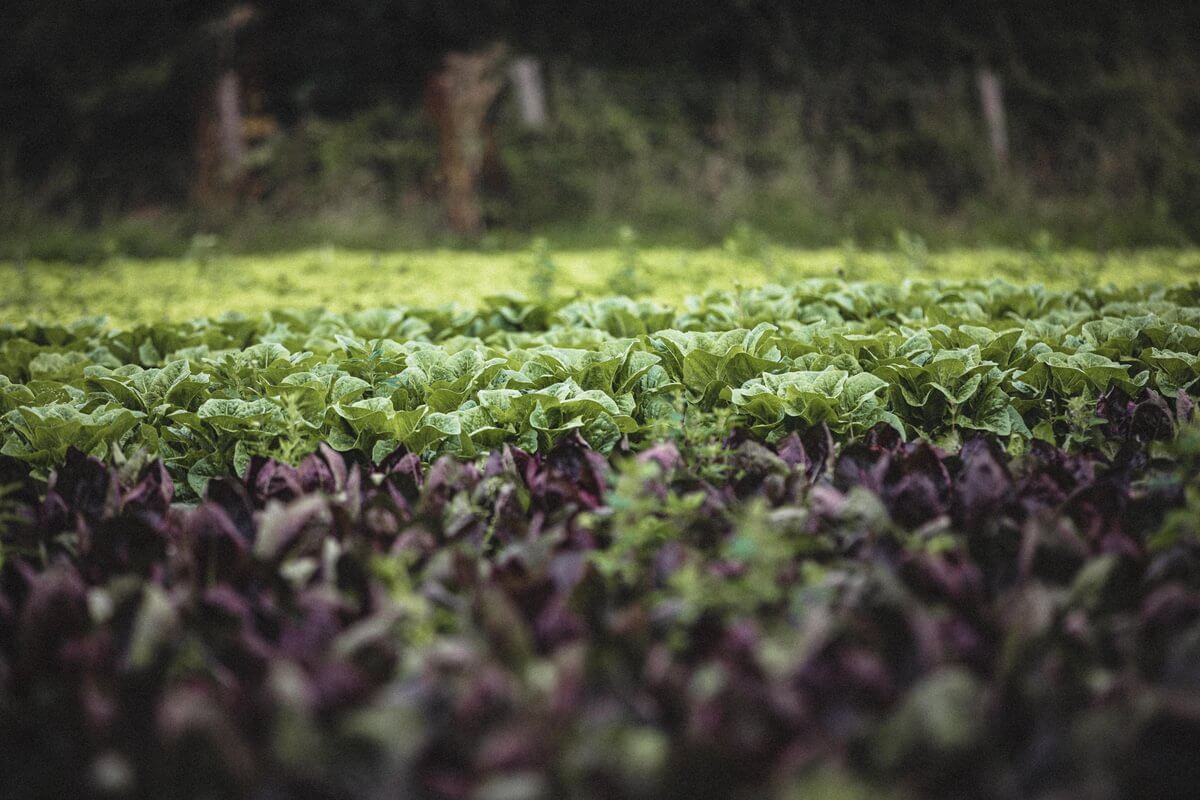
“A landmark 10-year study just showed that agriculture can absolutely thrive without pesticides” wrote Max Goldberg, founder of the Organic Insider newsletter earlier this month. “But here’s what makes this study especially remarkable,” he added: “[The] researchers used zero pesticides of any kind — not conventional, not biological, not even organic-approved inputs. A true zero-pesticide system.”
In a world where the food system is once again crumbling as supplies of chemical inputs are squeezed, concerns over pesticides laden with PFAS increase, political opposition to gene-editing softens both here and in the EU, and climate change batters production and brings new pest problems for farmers, this research is, surely, some much needed good news.
Let’s be clear, there are caveats and nuance in the findings, which will be unpicked rigorously by academics and industry for weeks and months to come. However, outcomes such as this one – “under certain conditions, pesticide-free crops matched or even surpassed conventional yields” – deserve time in the spotlight.
Chemical fix
The Rés0Pest project was created in 2012 to look at nine original cropping systems that used no pesticides, but with the option to use ploughing and synthetic fertilisers.
Workshops with experts and farmers helped to develop the systems covering a wide range of soils, weather conditions, and socioeconomic contexts (five agronomic cropping systems and four multicrop-livestock systems including temporary meadows) across the “open-air labs” managed by Inrae, the French National Research Institute for Agriculture, Food and Environment. Specialists from the Purpan Engineering School, Cirad, the French Agricultural Research Centre for International Development, and Iowa State University were also involved.
The goal was to use zero pesticides while reducing biotic stress (that caused by pests, fungi and weeds) as much as possible, with rotations that varied in duration from five to nine years. The approaches used to achieve this, which will be well-known to organic farmers, were: prevention, reliance on plant biodiversity, and protection of soil health. So, cover crops were introduced, ploughing was limited, crop rotations were diverse and infected crops were managed.
Then the yields were measured. “When the results were compared with Agreste data based on region-specific contexts, yields for the pesticide-free systems were often below those of conventional systems using chemical pesticides, but in some situations they reached equivalent levels or even exceeded them,” Inrae’s experts wrote. “Damage from pests and diseases in the pesticide-free systems did not increase significantly over time,” they added.
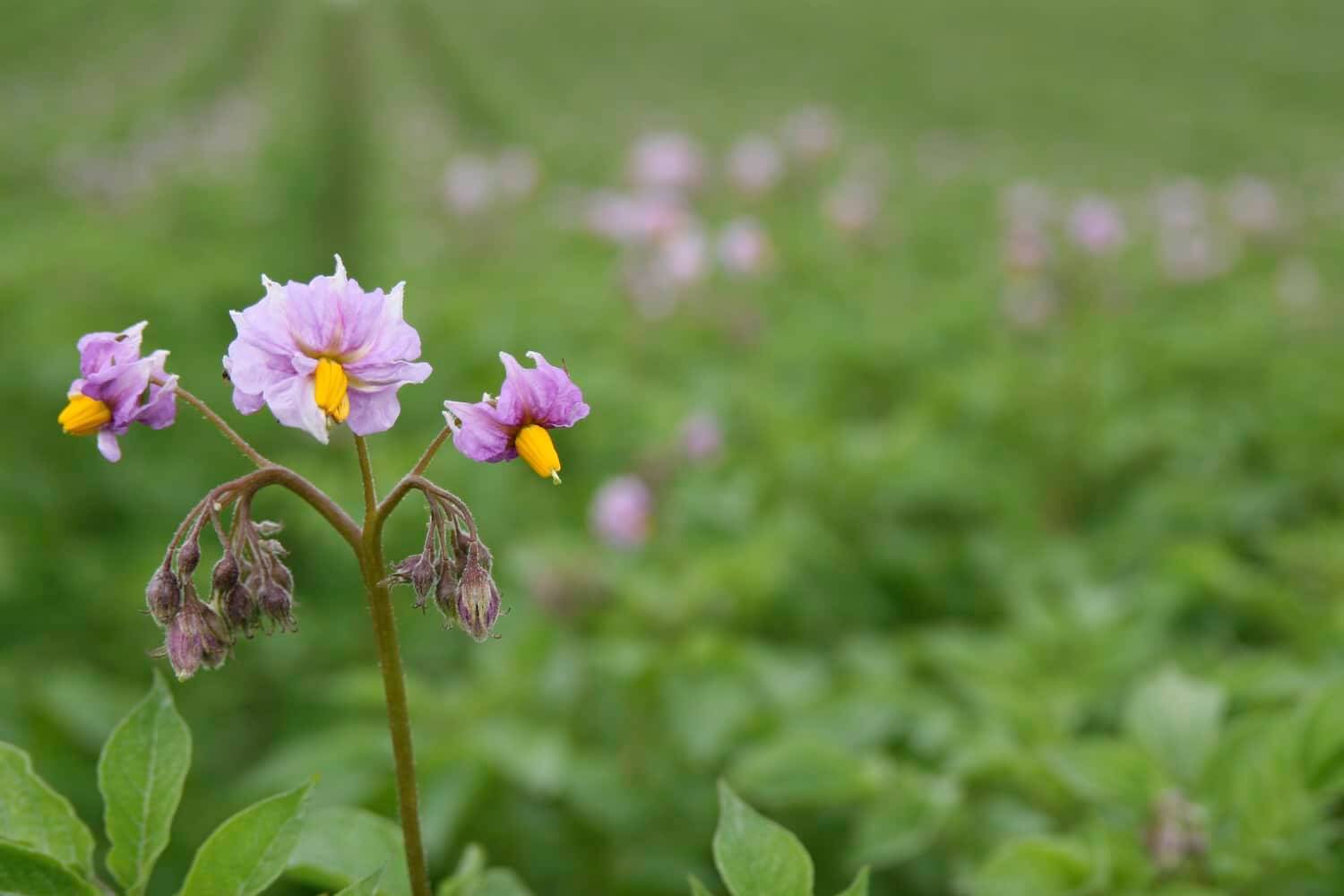
In the full study, published in The American Phytopathological Society journal, the team explained how the yield targets were achieved across different sites – “even for crops whose yield performance is considered to be highly dependent on pesticides, such as canola, sugar beet, and potato. For wheat, results confirmed the hypothesis that yields of pesticide-free crops using synthetic fertilisers can achieve higher yields than organic crops using organic and mineral-based fertilisers.”
The next stage of the project – called ‘0Phyto’ – is to incorporate data from organic agriculture experiments.
Weed management did prove “challenging in some situations”, especially for certain perennial weeds like docks and sorrels in temporary meadows (again, something many an organic farmer can empathise with). However, management of these improved over time, which is crucial given the long-term consequences of a single season of poor weed management for amplifying the weed seed bank in fields. “In some cases, managing weeds required ploughing, a practice that runs contrary to soil conservation principles,” the experts wrote.
Over the 10-year study, conventional arable cropping systems at four locations (Auzeville, Bretenière, Estrées-Mons and Grignon) produced a “satisfactory net profit margin”. In 20% of the years at these locations, estimated income was equal to or double income based on the French national minimum wage, whereas in 45% of site-years it was double or triple the national minimum wage and in 35% of cases more than triple the national minimum wage.
The attitudes of the researchers also shifted. “[…] they mentioned that they now find it challenging to work on experiments that require them to follow predefined and less flexible crop management plans,” the published study reads.
The findings have certainly excited those who support chemical-free, or at least far less chemical reliant, farming approaches, like organic, regenerative and agrocecological. “These results,” the experts explained, “show that conventional, pesticide-free arable cropping systems in France can be productive and technically and economically feasible”.
But of course, it’s not easy.
Indeed, in his statement following the publication of the results, Inrae research director Jean-Noël Aubertot, talked of taking risks “to explore the full realm of possibilities”.
There also needs to be support in public funding, policies and regulation – not least the application of the principle of “the polluter pays”.
According to the study, “although pesticide regulations in EU agriculture have led to the removal of a considerable number of hazardous and widely used substances from the market (…), a disruptive shift, such as striving for a completely pesticide-free culture, is necessary to achieve a profound transformation”. As PAN (Pesticides Action Network) Europe noted: “This conclusion directly contradicts the current direction of the European Commission.”
Going RoundUp in circles
We are stuck in a pesticide cycle that is proving hard to escape. Agrichemical companies are in fact using the narrative of a broken food system to push for more chemicals, as well as a relaxing of assessment rules and restrictions, all in the name of ‘food security’. This will only see the hole we have dug get deeper, and the biodiversity crisis become more desperate.
Indeed, PAN UK this month published research showing glyphosate use in UK farming is up 1000% since 1990. “Probably nothing to worry about,” quipped Soil Association head of food policy Rob Percival. “I mean, it’s genotoxic and carcinogenic and endocrine-disrupting and it’s in your bread and beer and breakfast cereal. But apart from that, probably fine.”
Whether politicians in Westminster are brave enough to take risks to support this bold way of chemical-free farming should become clearer this year. The Farming Roadmap is due to be published: will it lead us to better ways of farming or keep us going round in circles?



0 Comments