

The latest salvo fired in the campaign against the UK’s rising number of intensive farms has highlighted the apparent public health risks from air pollution linked to poultry and pig production.
A worrying report published last week by the pressure groups Compassion in World Farming (CIWF) and Sustain revealed ammonia “hotspots” across the UK and found that areas with the highest emissions corresponded with high concentrations of factory farms.
Amongst the counties identified with high levels of pollution were Herefordshire, Lincolnshire and Norfolk, all known powerhouses of intensive livestock production.
Ammonia is an invisible gas emitted by farm animals and livestock waste and can mix with other pollutants to create harmful particles linked to increased death rates, respiratory problems and cardiovascular diseases. Ammonia can also impact the environment, affecting biodiversity and ecosystems.
Previous research by scientists estimated that as many as 3000 lives across the UK could be saved each year if air pollution from farming was cut by half, with ammonia found to be driving the increase in harmful particles.
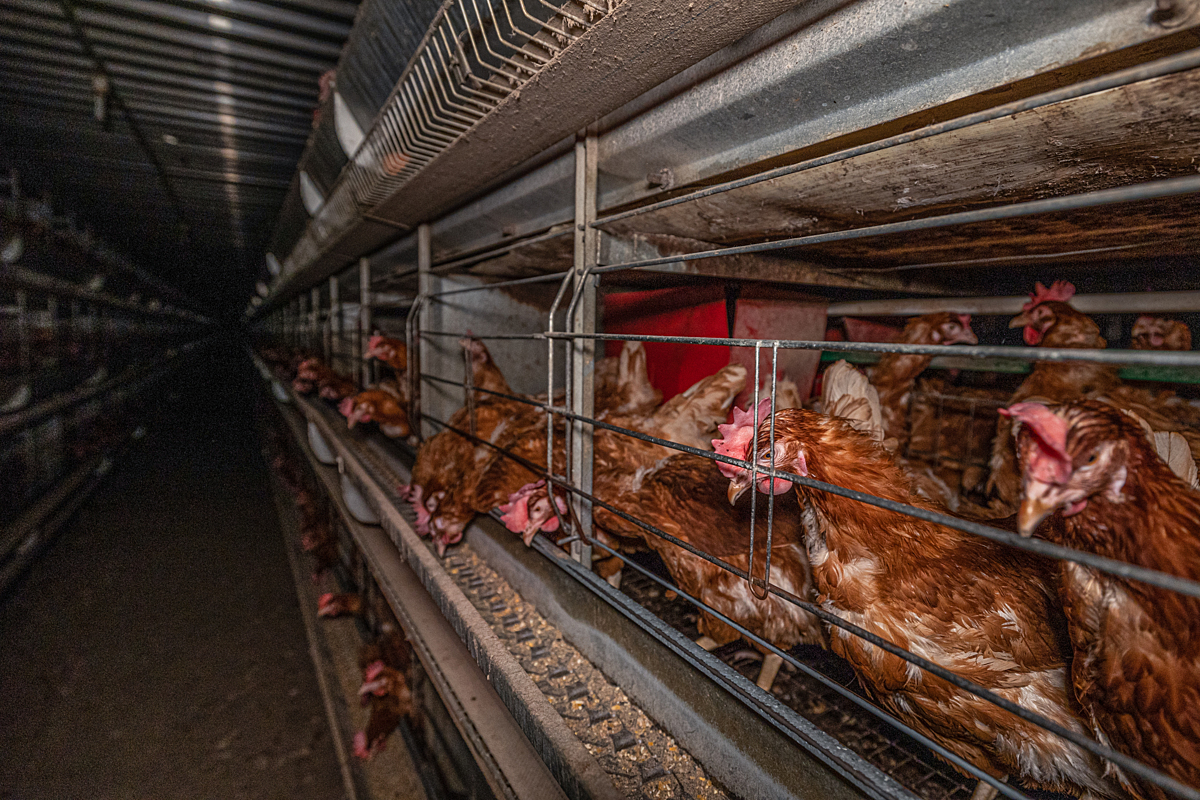
To illustrate the scale of the problem, campaigners have also unveiled an ammonia map, based on an estimation of the gas produced by intensive livestock units. The calculations were reached after researchers analysed farm stocking numbers and average ammonia production factors for several categories of livestock, including meat (broiler) chickens, indoor egg laying birds, and pigs.
CIWF and Sustain said their findings raised “major concerns” about air quality, the wider public health impact of intensive farming, animal welfare and environmental damage.
The groups said that “in factory farms, large numbers of animals are kept in confined, crowded environments where manure accumulates quickly, creating high levels of ammonia in the air. These concentrations irritate animals’ eyes and respiratory systems, increase stress, and heighten vulnerability to disease.”
They added that environmental impacts were “equally severe”, as “excess nitrogen from ammonia deposition acidifies soils, fuels algal blooms, and degrades forests, grasslands, wetlands and freshwater habitats.”
Impacts on communities
The investigation found evidence that some communities living near concentrations of factory farms had reported a range of adverse impacts linked to air pollution.
I didn’t want to live next door to a factory… the noise would wake me at night, so I stopped sleeping – the stress caused panic attacks, I felt like a wasp in a jar – trapped, angry and desperate. Kate Milsom
In Lincolnshire, one local resident, Michele Franks, described to researchers how emissions from a nearby poultry farm regularly forced her indoors, triggered chest tightness, eye irritation and breathing difficulties during chicken shed cleanouts that lasted up to five days. The spreading of chicken manure on nearby fields created further air quality problems.
Franks said: “When the chicken sheds are cleaned out, the smell and the polluted air hits me straight away – my chest tightens, my eyes sting, and I have to shut every window in my house just to cope. I’m asthmatic, and for days I can’t even step into my own garden.”
She added: “They say escape to the country for cleaner air but no one should have to live sandwiched between industrial units that make them gasp for breath. This isn’t just a countryside smell – it’s a serious health risk, and it’s getting worse.”
In another case cited in the report, Kate Milsom, who lived in the Wye Valley, Powys, said applications for new intensive poultry farms had forced her to move house twice. Milsom described to researchers how emissions from the farms on her doorstep “caused her eyes to sting for weeks at a time” and that she had to stop her niece, who was asthmatic, from visiting as the ammonia from an adjacent chicken unit would aggravate her breathing.
“I didn’t want to live next door to a factory… the noise would wake me at night, so I stopped sleeping – the stress caused panic attacks, I felt like a wasp in a jar – trapped, angry and desperate,” Milsom said.
“I found the odour and the noise particularly disturbing, the smell of ammonia was so invasive. My eyes had started to sting and water – I had days when I couldn’t use the computer because my eyes were so sore, I couldn’t see. I had to keep my doors and windows shut and I became increasingly concerned about my health and the impact of airborne particles. I started to keep a diary of the smell, and there were only two weeks in a month when it was okay to have visitors.”
Industry hits back
In response to the findings, industry organisations questioned the data used in the campaigners’ report, and highlighted progress in reducing ammonia pollution from pig and poultry farms.
Lizzie Wilson, chief executive of the National Pig Association, said in a statement that whilst the pig sector had “a responsibility to ensure its impact on air quality is as limited as possible”, the NPA questioned how the data for the ammonia map was derived and what it included, given that it didn’t “appear to directly correspond with the type of production the report claims.”
“The pig sector is, by way of various environmental legislation […] one of the most highly regulated sectors within agriculture and as such, it specifically only accounts for 8% of total UK ammonia emissions,” she said.
The NPA pointed to research, led by the Agricultural and Horticultural Development Board (AHDB), that they said had been accepted by the Environment Agency to show an average reduction of 50% over 10 years across various housing types.
“According to Defra, ‘the fall in emissions from livestock other than cattle, especially from the pig and poultry sectors, is the main driver in the gradual fall of overall ammonia emissions since 1990. This can be partly explained by the Pollution Prevention and Control Act (1999) making all new intensive pig and poultry installations subject to ammonia controls through permitting,” Wilson said.
Richard Griffiths, chief executive of the British Poultry Council, said there was “strict and robust” regulation controlling emissions from the UK’s poultry meat sector. “British poultry meat is a huge contributor to this country’s food security,” he told Farmers Weekly magazine. “[It] is farmed to high standards with as low an impact as possible.”
“CIWF’s renewed attack on livestock farming is yet another concocted outrage based on their dislike of what we do,” he said.
“The fact is the poultry sector is working hard to enhance its sustainability while feeding the nation with safe, nutritious, and affordable products enjoyed by the majority of consumers.”
MPs investigate
Either way, the wider issue of air pollution has caught the attention of ministers. In January, the environment audit select committee announced an inquiry, and said that MPs would look into how air pollution affects different parts of the country, including examining ammonia linked to farming specifically.
Toby Perkins MP, the committee’s chair, said air pollution was “a scourge of our precious natural environment and a profound threat to our health”. He said that it disproportionately affected some of society’s most disadvantaged groups and that any just transition to a net zero society needed to tackle the problem urgently.
The committee is currently exploring whether the government’s air quality targets are enough to protect the UK’s health and the environment and examining some of the farming practices linked to air pollution, including the spreading of slurry – liquid livestock waste often used as fertiliser – on farmland.
The inquiry follows an investigation two years ago which revealed that ammonia pollution linked to intensive chicken farming was surging in parts of the UK.
Reporters found that, while ammonia levels had fallen nationwide since 2017, they had risen sharply in areas with large numbers of poultry farms, reinforcing concerns over the health impacts for those in factory farm hotspots.
“The more farms you add in an area, the more total ammonia is released,” one employee at an environmental regulator said at the time. “This is a real weakness as you do not have a single ammonia emission limit set [for the region].”
The probe also uncovered worrying regulatory loopholes that meant that significant amounts of emissions were going unreported, as farms housing fewer than 40,000 birds were not required to report ammonia emissions. Ammonia pollution from farms’ waste consignments could also go unreported altogether, the research found, because there was no legal requirement for a farm to monitor waste that leaves its site.
Later this week, MP’s sitting as part of the select committee’s inquiry are expected to hear further evidence about some of all this from air pollution experts. Let’s hope they are spurred on sufficiently by what they hear to recommend robust government action. And fast.
Image courtesy of We Animals


0 Comments