

The maker of KitKats has been accused of taking a break from its climate commitments after it pulled out of the Dairy Methane Action Alliance. Coca-Cola, PepsiCo and Diageo (which makes Guinness, Baileys, and Smirnoff) have all been accused of backtracking on various environmental promises of late. So, can we trust these big companies to stick to their word?
Before we look at what’s happened at Nestlé, it’s worth offering a little context.
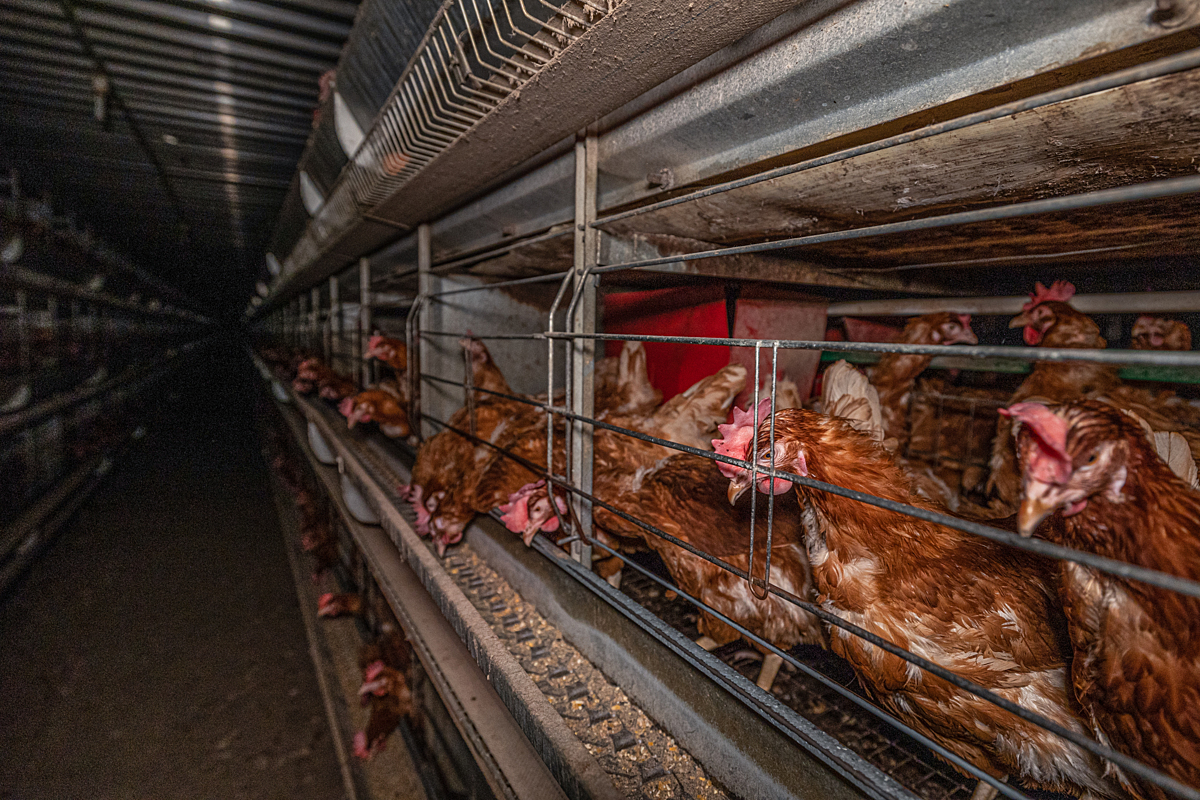
Cutting methane emissions, including from the burps of ruminant livestock like cows and sheep, is seen as a climate emergency ‘brake’ and one of the most important short term climate mitigation measures. And pressure is growing on those with heavy meat and dairy footprints to report on their methane emissions and set separate targets.
Which is why the Environmental Defense Fund (EDF), a US green NGO, set up the Dairy Methane Action Alliance. Nestlé, as well as other dairy giants like Danone and Lactalis joined the collaboration, which has grown in the past two years.
In an update on progress across the alliance, published in May, EDF said another three new companies had joined. Existing members, Danone (which owns Activia and Alpro) and Lactalis USA (maker of Président cheese), had also published methane dairy action plans, with founding member Danone also making “noticeable progress” towards its target to reduce methane emissions in its fresh milk supply chain by 30 per cent by 2030.
EDF said: “Alliance members Bel Group, Clover Sonoma, Danone, General Mills, Lactalis USA and Starbucks are now leading the industry with some of the sector’s first public dairy methane emissions disclosures.”
That update did not mention Nestlé, which should have set alarm bells ringing. Indeed, this is the world’s largest food company – a global dairy giant present in 188 countries, and which has more brands than most people have had hot dinners. This is also a business that is responsible for twice the methane emissions of Switzerland’s entire livestock sector.
And last month, eagle eyes at Bloomberg spotted that Nestlé’s logo had been removed from the methane alliance’s website. Cue plenty of criticism. Nusa Urbancic, CEO at Changing Markets Foundation, an NGO focused on livestock emissions, said the withdrawal “on the quiet” is “the latest case of corporate greenwashing”.
Bloomberg said the company “declined to elaborate on its decision”. Urbancic suggested the withdrawal may be linked with the change in leadership at the Switzerland-headquartered company last month. That isn’t clear, though I have been reliably informed the new boss Philipp Navratil has already reiterated the importance of the company’s net-zero targets internally.
Navratil is also hellbent on restoring the faith of shareholders, which for the majority will be led by short-term economics rather than environmental and social commitments (even though they are so intricately entwined and already causing food processors pain as extreme weather batters harvests more frequently).
Methane cloud
Nestlé, which also makes Nescafé, Perrier, Häagen-Dazs and Purina pet food, has set targets to reduce its greenhouse gas emissions, including methane, by 20 per cent by 2025, 50 per cent by 2030 and 90 per cent by 2050. Its scope 3 Forest, Land and Agriculture (FLAG) targets, approved by the Science-Based Targets initiative in 2023, amount to reductions of these emissions by 50 per cent by 2030 and 75 per cent by 2050.
The company’s latest non-financial disclosure report shows dairy and livestock accounted for 22.41MtCO2e of scope 3 emissions from its ingredients in 2024. Methane emissions, meanwhile, have been reduced by 20.56 per cent, to 13.08MtCO2 since 2018 (the baseline). Carbon dioxide has been cut to 24.06MtCO2e, down 20.19 per cent on 2018 figures.
Not too shabby. Indeed, when I looked at the carbon reduction progress across the 10 largest global food and drinks companies, in 2022, Nestlé was one of only two that had managed to reduce its emissions (the other was Danone). Across the other eight, greenhouse gas emissions were rising – and likely still are for many of them – and this following all the hot air and hype of 2020 when food and drink companies fell over themselves to commit to achieving net-zero at the COP climate talks in Glasgow.
The accuracy of these published figures is under constant scrutiny. Urbancic and her team at the Changing Markets Foundation have previously reported on a “methane blind spot” for Nestlé, claiming that it uses carbon “accounting tricks” to keep growing its dairy portfolio rather than swinging towards plant-based options that have significantly reduced emissions. “Nestlé’s intention to grow its dairy production contradicts scientific evidence that reductions in production of high methane products such as beef and dairy are key to meeting climate targets,” CMF said in its 2023 analysis of the company’s net-zero plans.
Spill the (carbon) beans
In June, the NewClimate Institute, a think tank that tracks carbon commitments and toils over the accounting of large companies, ranked Nestlé’s overall climate strategy integrity as ‘poor’. “Contrary to the need for a shift away from animal protein, Nestlé underlines the importance of dairy and the dairy industry repeatedly,” NCI noted.
It wasn’t the only one to be accused of “neglecting” to cut methane emissions, as Danone, Mars, JBS and PepsiCo also came in for such criticism in the NCI’s agriculture deep dive in June, which claimed all five companies show a “lack of commitment to deep, structural emission reductions, especially regarding methane emissions”.
Many of these companies have also made a massive play for regenerative agriculture – an approach which certainly has myriad environmental benefits if followers are truly committed to its ethos. Whether it can deliver the emissions reductions that food and drink corporations claim is debatable, especially if they only tinker around the edges of what should be a true, just, deep and lasting transformation of food production.
What Nestlé does next therefore intrigues me. The big food and drink companies are approached regularly to join new schemes, initiatives, and commitments, so they can’t join them all (there are literally hundreds, one source told me). However, news of a major backer bowing out of a global alliance focused on methane, a gas which needs to be curbed quickly, will certainly raise questions about the future of such voluntary initiatives.
CMF’s Urbancic, a vocal critic of these industry-influenced approaches, said the methane alliance did not require dairy giants to put in place any methane targets, only disclosure and action plans. “It seems that even this relatively relaxed approach was too much for Nestlé – the biggest food company with billions of profits,” she said. Or, is the company thinking that it has done enough reporting and really now wants to focus on action?
Time will tell. The fact this was a ‘quiet quitting’ certainly doesn’t smell good, but few large companies have mastered the art of clear and concise communication on climate change.
Dustin Benton, MD of sustainability at Forefront Advisors, said this was a timely reminder that reducing methane from cows, for example via feed additives, is “one of the least disruptive (to farmers) and cheapest ways of lowering the climate impact of food”. Benton, who worked on the topic when head of policy at the Green Alliance, a UK think tank, said that even if the full cost of feed additives were added to the cost of milk, it would only cost the average consumer 33p per year.
To Nestlé and its new leadership team looking to slim the business and keep customers coming back, that might be 33p too much. What Nestlé does next is crucial. This is a company that has hyped-up its commitment to sustainability and in particular net-zero for a number of years, and has made much of its considerable – CHF1.2bn (£1.13bn) – investment in regenerative agriculture between 2020 and 2025. Will there be as much to spend on sustainable farming in the next five years?
Crunch time
Being the biggest means your environmental efforts will be more closely scrutinised than most. This is a multi-billion dollar food and drink behemoth with a carbon footprint of 113MtCO2e, according to its net-zero roadmap, 92MtCO2e of which are included in its reduction programme. If the KitKat maker’s commitment to climate change cracks, many others will undoubtedly get the taste for U-turning too.
The WL GLOSSARY is written by journalist David Burrows, who specialises in sustainable business. Throughout the series, we look to break down the woolly, misleading, and mendacious terms, language & logos in our food system – and provide citizens with information that they can use to make more empowered choices.





0 Comments