
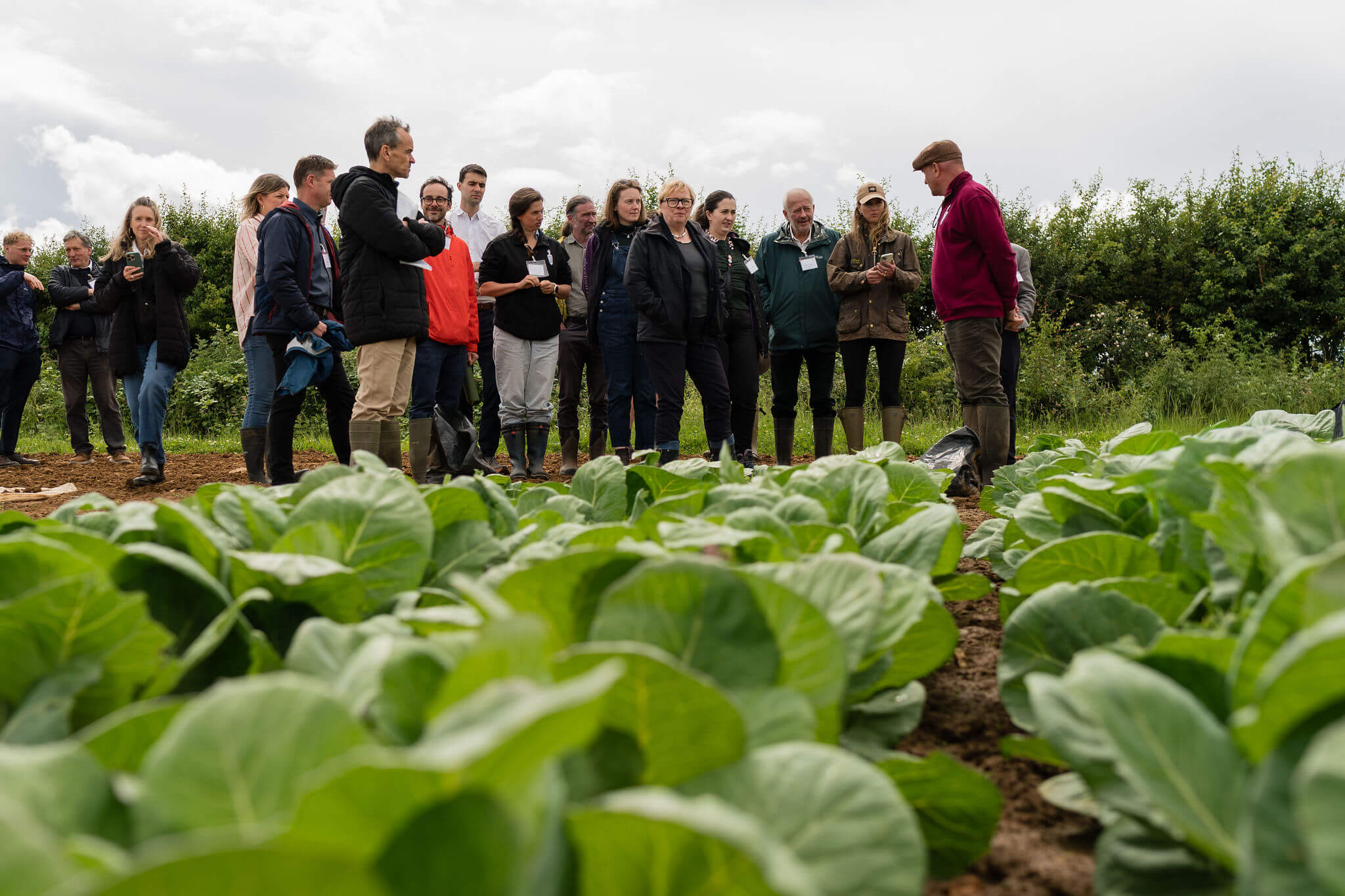
Yesterday (June 10 2026), Farming Minister, Dame Angela Eagle, visited Riverford’s organic farm and packing facility at Sacrewell near Peterborough to meet farmers and representatives from across the organic sector and discuss scaling up organic production and strengthening supply chains to meet increasing consumer demand.
At such a volatile time for global markets, and with an ongoing cost-of-living crisis, organic offers some hope. Most organic farmers (85%) report sales either growing or staying stable with less than 10% experiencing a sales drop, according to a farmer survey conducted as part of this year’s Organic Market Report, compiled by Soil Association Certification.
Rob Haward, CEO of Riverford, said: “British farmers are facing growing pressure from climate volatility, rising costs and supply chain disruption. Organic farming can help strengthen resilience because it builds fertility in the soil rather than relying on synthetic fertilisers and chemicals, and supports healthier, more diverse farming systems. At Riverford, we’ve farmed organically for 40 years because it offers something straightforward: strict standards, full transparency and farming that works with nature, not against it.”
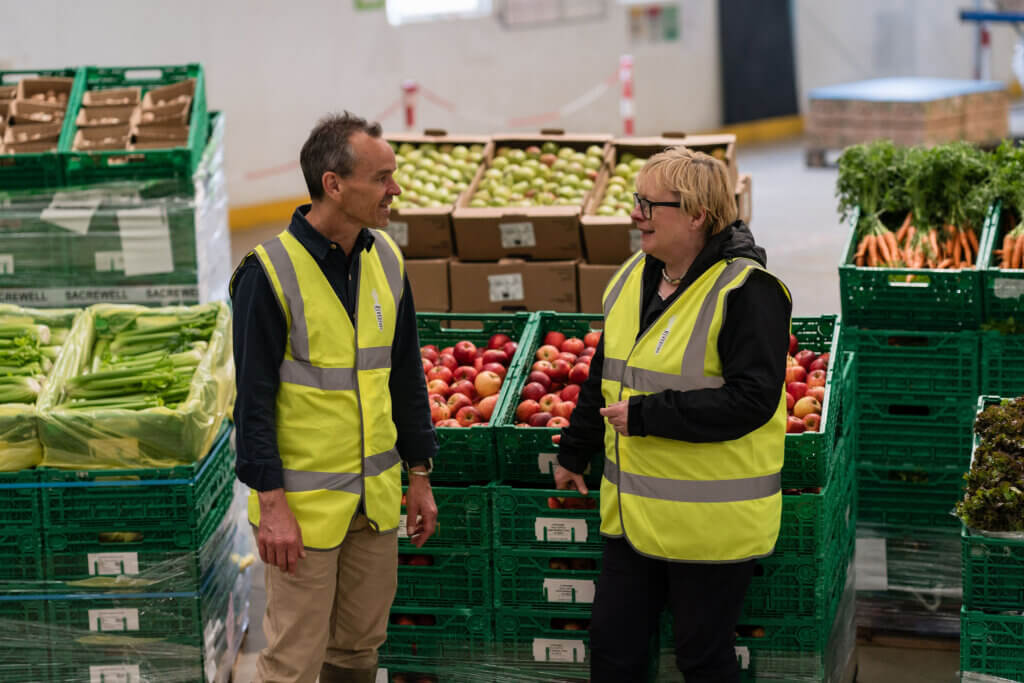
The visit brought together representatives from Riverford, the Soil Association, and the English Organic Forum (EOF) to discuss how organic farming can support resilient food production, healthier soils, greater biodiversity, and stronger domestic supply chains.
The visit follows other recent engagement between the Minister and organic producers, including visits to Growing Communities and G’s Organic, showing growing dialogue between Government and the sector.
As previously reported by Wicked Leeks, the organic market in the UK continues to grow, reaching £3.9bn last year, a 4.2% year-on-year increase. Yet this progress is not reflected in organic farmland in England, which remains static at around 3% with much of the demand being met by imports.
This sharply contrasts with devolved nations that have implemented clear strategies that supports organic conversion and production. Conversations included how this expansion can be replicated in England in the coming years.
The discussions form part of ongoing discussion between Government and the organic sector as work continues on the future of organic farming policy in England.
Sector representatives discussed how future policy could help respond to the vulnerability of food systems exposed by recent global events, while strengthening domestic processing and distribution capacity, and improving access to organic food through public procurement and retail supply chains.
“Demand for organic food is growing strongly, yet much of that demand is still being met through imports. We were pleased to welcome the Minister to Sacrewell and discuss how British farmers and food businesses can meet more of that demand, strengthen domestic supply chains and build a more resilient food system for the future,” concluded Rob Haward.
Adrian Steele, Co-chair of the EOF and Soil Association Farming Advisor, said: “Organic farming provides government with a key solution to tackling the climate and nature crises without taking land out of our food production. There is also rising consumer demand for organic that British farmers can tap into, as a significant proportion of this demand is currently being met by imports.
“We are therefore delighted to see the minister’s interest in organic with her visit to Riverford, during which she heard from representatives from across the sector about how organic carries growth opportunities and environmental benefits. Through ongoing, collaborative work with Defra, we’re seeing recognition that organic can support government ambitions by delivering resilient food production with healthier soils and more biodiversity, without relying on synthetic inputs. We now look forward to finding practical outcomes that benefit the whole supply chain through an Organic Action Plan for England, which is expected to land this summer and build on organic’s decade-long market growth.”
The sector says these discussions are timely given the increasing vulnerability of food systems exposed by climate volatility, supply-chain disruption and global uncertainty.
Update: On 12 June 2026, Dame Angela Eagle was appointed Minister of State. Wicked Leeks is closely following the story and will publish updates in due course.

I’m delighted to see a representative of a government that has not treated farming well learning more about methods that work with nature. However, I would also like to see greater governmental support for alternative proteins including lab grown meat (shock, horror!). If organic, agri-environmental et cetera et cetera expand, then very good, but that means less overall yield and people have to eat.