
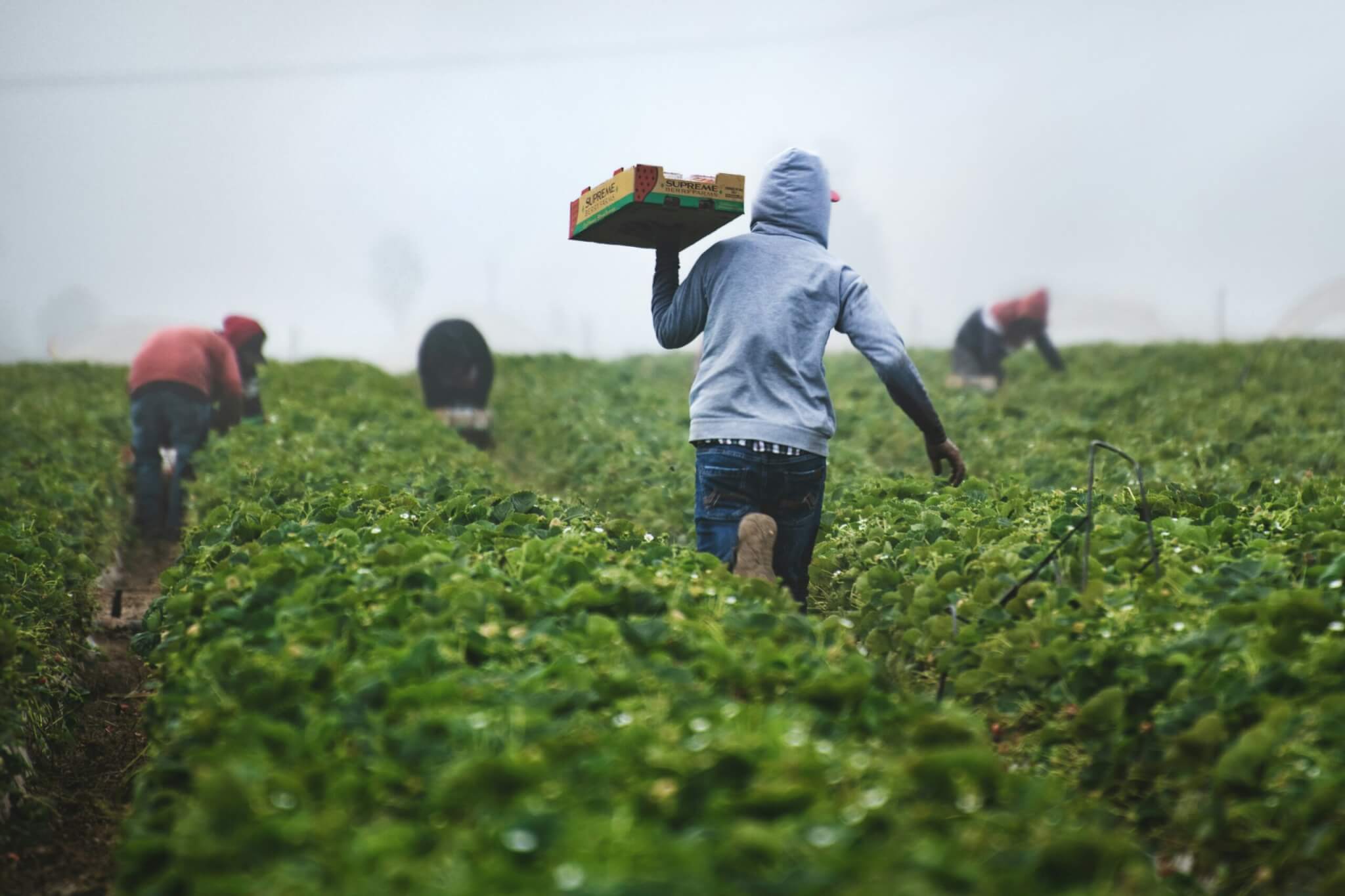
The UK is not alone in seeing unfair farm-gate prices. A recent survey of over 10,000 farmers across 158 countries – one of the most extensive farmer surveys ever conducted – shows a worldwide farming community that’s on its knees.
The poll demonstrates a global food system that isn’t working for the very people it is supposed to nurture – the growers and farmers putting meals on peoples’ tables everyday. Over half said they aren’t being paid a fair price for their produce and labour, and nearly one in four said their income had dropped significantly over the last year – the decline was steepest in Europe.
“This survey is one of the largest of its kind and found that farmers across the world are under sustained financial and environmental strain. They are not paid fairly for what they grow. This is a global phenomenon, which isn’t restricted to certain countries or regions. Growers also feel largely unsupported by the institutions that are meant to back the sector,” says Georgios Myrisis, lead researcher of the survey and agronomist at Wikifarmer who conducted the survey.
He adds: “What is interesting about this poll is that a significant proportion of farmers across the globe experienced a number of challenges at the same time, with 15 percent of growers saying they had a drop in incomes, unfair pricing, high stress, as well as low government support – this is a worldwide polycrisis in the making, which will be difficult to fix.”
Wikifarmer is an Athens-based B2B farmer platform, which polled its vast network of growers among others, many of whom were small in scale. The aim of their ‘Voice of the Farmer 2026 survey’ was to get a clearer understanding of what is really happening on the ground with farmers’ and their lived reality.
When asked about their earnings, 45 per cent of farmers said that their net income this year was worse than the year before, while nearly a quarter said it was much worse. Almost half of all respondents rated their own financial security at the bottom of a five-point scale.
Interestingly, respondents in Africa and South Asia reported noticeably higher rates of perceived fair pricing compared to those based in Europe and Latin America. Farmers who sold directly to customers were also 35 per cent less likely to report a decline in income; selling at farmers’ markets was also associated with less decline.
Climate stress is a real issue
Crop losses from climate change and those from disease were also significant.
An eyebrow-raising 83 per cent reported losing part of this year’s production to weather or pests, while one in four said they had lost more than a quarter of their output. The steepest rates of loss were reported in India, Italy and Colombia – these countries are significant agricultural economies. “We know the climate is changing for sure. Farmers are now the in the frontline dealing with these weather-related issues,” states Myrisis.
Drought was the most damaging climate hazard reported by farmers, followed by heat, flooding, storms, and frost. The survey also found that larger farms often reported higher stress than smaller ones. This questions the widely held assumption that bigger farms are better able to deal with the changing climate challenges that the sector faces.
“You would think that larger farming businesses had more resilience, but this is not the case. We’ve found that they experience much more financial insecurity, since they also have more to lose,” details Myrisis.
The survey found that farmers were also sharply critical of the support they receive from government and public institutions; nearly half gave their local authorities the lowest possible score, only 13 per cent rated them positively.
Discontent also crossed national boundaries extending from Poland to Peru, Greece to Cameroon. “It is not just about insufficient funding, but as we see in Greece, it’s also about the very uneven distribution of support that is given by governments and public authorities,” states Myrisis.
Mental health issues a global phenomena
Poor farmer wellbeing and mental health isn’t just restricted to British farmers either. More than one in five growers across the globe chose the highest possible score when rating their stress, while over a third rated themselves at the top two levels of such a scale.
Poor wellbeing also builds as age progresses, peaking with farmers aged 41-50 then tailing off as they get older. “High stress was particularly prominent among European farmers, with many growers experiencing poor mental health,” says Myrisis.
The extensive nature of this global survey shows that the food and farming systems across the world isn’t delivering for growers and the problem is systemic.
Prices in the supermarkets, in retail, or farmer’s markets do not represent the true cost of production, while retailers, middlemen and other operators in the supply chain are capturing more of the profit.
“The farmers are doing most of the work, but they are often paid the least in the supply chain. It is essential for growers to be better connected to buyers with better access to markets and shorter supply chains,” details Myrisis.
Inflation due to higher energy, fuel and fertiliser costs (much of this linked to war and instability in West Asia) is also unlikely to translate into higher farm-gate returns in the near future. This is also due to the fact that price increases are currently cost-led rather than demand-driven. This means that many growers will face tightening margins going forwards into 2027.
“The next step is to look at solutions to improve the lives of farmers and reduce these stresses. We need new approaches, with new routes to market for growers and to improve their wellbeing,” concludes Myrisis. Whether or not governments and public authorities will sit up, take notice, and drive decisive, joined-up action – before yet more farmers leave the sector and the industry reaches a point of no return – remains the biggest unanswered question.


0 Comments