
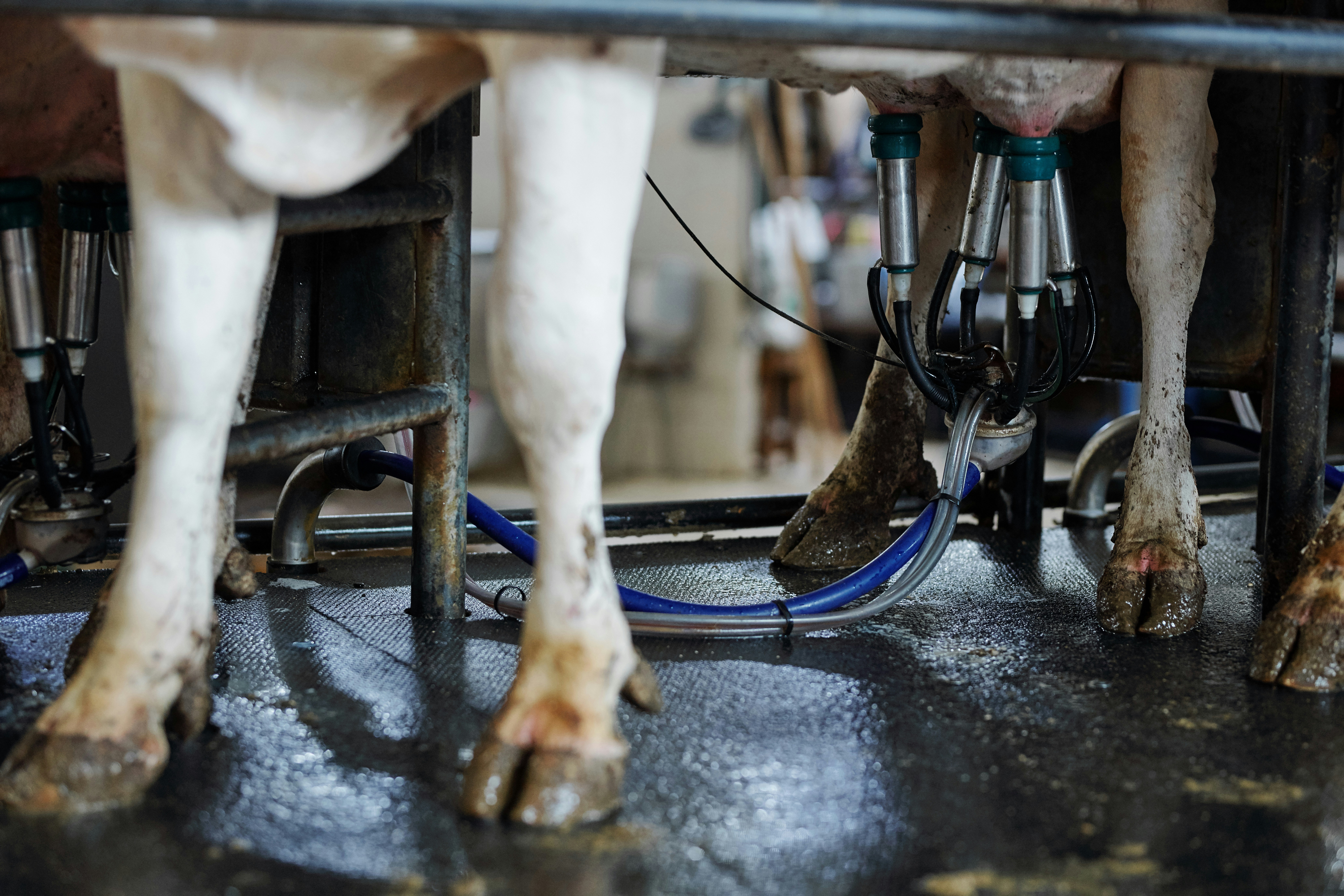
Analysis of recent Environment Agency figures by The Wildlife Trusts calculated that dairy activity was responsible for 71% of serious agricultural pollution incidents in England alone – damaging rivers, contributing to algal blooms, reducing oxygen levels and harming wildlife.
The current system, which has seen a significant rise in the number of intensive dairy farms with hundreds or even thousands of cows within the last 10+ years, is billed as ‘more efficient’ and ‘lower carbon’, but is in part also driving increased pollution and exposure to the impacts of climate change. “[…] we cannot measure the health of the dairy sector by output alone,” said Gemma Lane, Land Use Policy Manager at The Wildlife Trusts.
Meanwhile, UK organic dairy cow numbers fell by 6% between 2023 and 2024, continuing a decline since 2019. In 2024, organic dairy accounted for just 1.5% of cow numbers in the June consensus.
Less dirty way of doing dairy
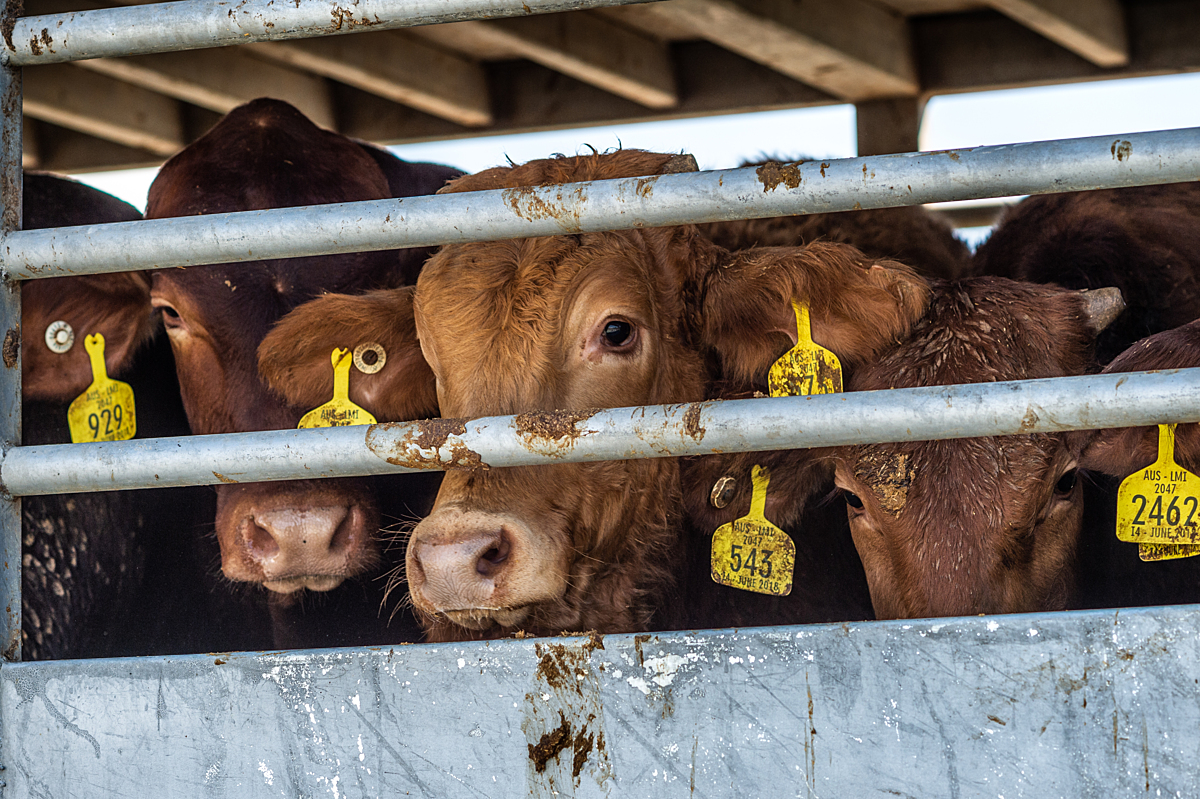
More than 40 mega-dairies exist across the UK, the largest of them housing 2,600 cows. The number of farms keeping cattle indoors year-round has more than doubled over the past decade, increasing the volume of slurry that must be stored and managed, while existing infrastructure is failing to keep pace.
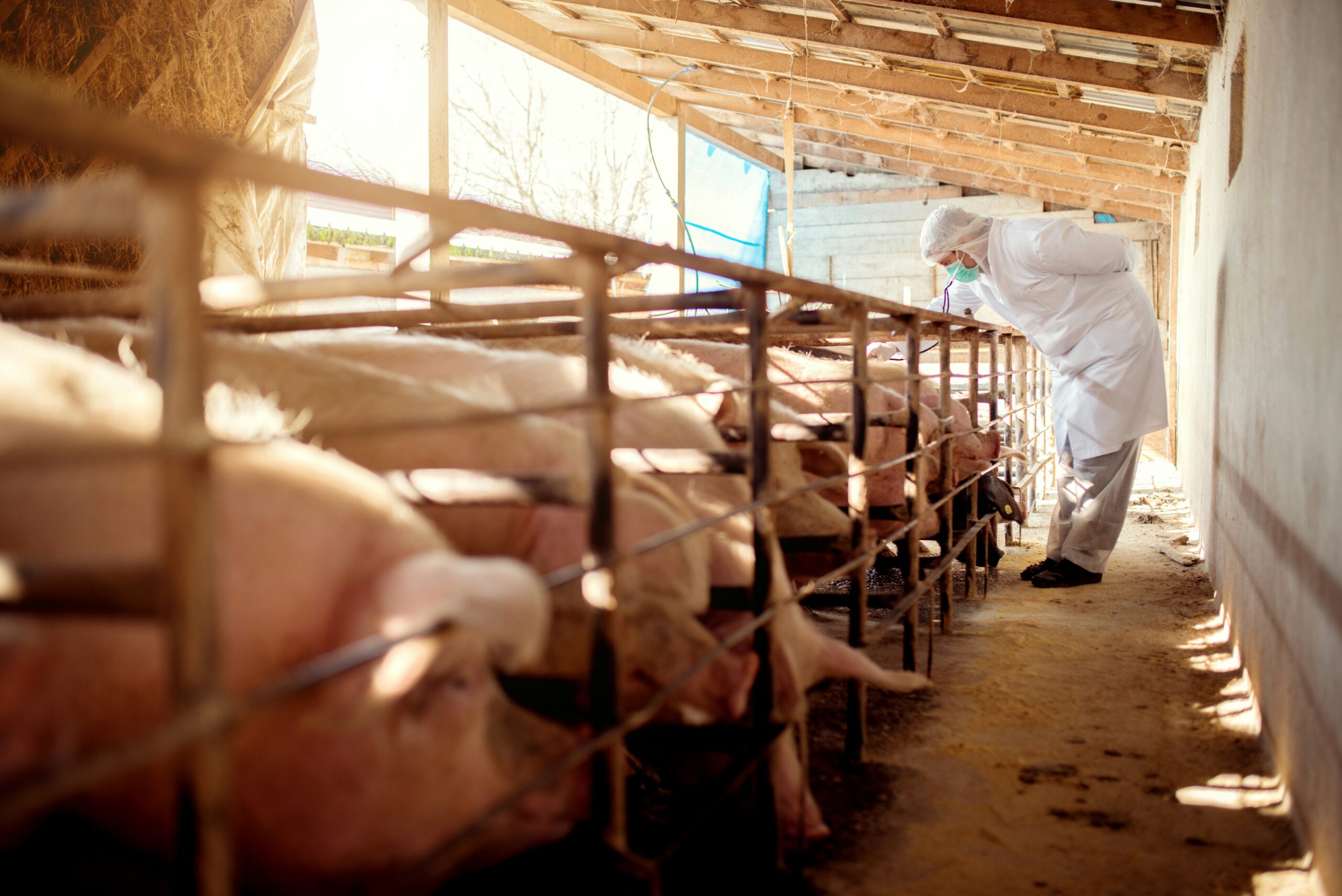
However, unlike intensive pig and poultry units, large dairy and beef farms are not subject to the same government monitoring, meaning their size and environmental impacts are left largely unchecked.
The Doing Dairy Differently report, published this week by the Wildlife Trusts, warns of the growing pressure these larger intensive farms are placing on the land, water and wider environment on which farms, people and wildlife depend.
The report states: “The UK dairy sector is producing more milk from fewer, larger farms by moving towards more feed-reliant housed systems. This consolidation is reshaping the industry, with larger herds, more housed systems (herds kept indoors) and greater reliance on bought-in feed.”
Indeed, milk production for the 2025/26 season is forecast to rise above 13 billion litres (up 5% on the previous year). Over the last decade, average milk yield per cow has increased by 9%, reaching 8,169 litres per cow per year.
At the same time, the number of dairy producers is falling: dairy producer numbers fell 14% between 2019 and 2023, from 8,720 to 7,500, with a further 190 producers leaving in the past year. As of October 2025, the total dairy herd stood at 2.51million cattle; the average conventional herd size has increased from 134 cows in 2005 to 226 in 2025.
As one member of the peer-to-peer platform Farming Forum UK noted during an online discussion about yields and consolidation: “Farmer near me milking 5000+ cows across multiple sites, all housed, tarmac farming, 12,000 litre plus av. yield. Would have taken 100 dairy farms to produce that a generation or two ago. ’tis progress, apparently.”
These milk gains are often presented as efficiency improvements, but they also mean greater pressure on land, feed, slurry storage and water quality, argued Lane. Consolidation is concentrating production into fewer businesses, increasing the scale of local nutrient, slurry and feed pressures where herd expansion is not matched by land, infrastructure or regulation, she explained.
The Bureau of Investigative Journalism recently found the number of intensive units where animals are kept permanently indoors has more than doubled in the past 10 years. Within this has been the rise of ‘megadairies’, which house more than 700 cattle.
Supermarkets milk profits at producers’ expense
The authors of the new report argue that the barrier to a more sustainable dairy sector is not a lack of good practice, but a “supermarket profits-led system” that too often rewards volume over resilience, pushes risk back onto farmers, and fails to account for the damage caused by pollution, imported feed and declining natural resources.
The Wildlife Trusts called for stronger regulation and investment to help prevent pollution – including the permitting of very large, housed units and farms with little or no grazing, while helping farmers invest in slurry storage and other pollution-prevention infrastructure.
Permitting of intensive dairy and beef farms is being considered by the Government but concrete plans are yet to emerge. The National Farmers Union has raised concerns about the cost of permitting and is pushing back against extending the environmental permitting regime to cattle.
Environmental permitting is a regulatory process that sets minimum standards for operations that aim to reduce pollution and potential risk in terms of air, water and land. These cover nutrition, housing systems, slurry management and the control of and monitoring of emissions.
Both the pig and poultry sectors are required to obtain environmental permits; for poultry this is required for above 40,000 places and for pigs this applies to numbers over 2,000 places over 30kgs for production and 750 places for sows.
The government’s plans to extend permits come on the back of intensive scrutiny of pollution from large, intensive farms. The UK Government’s Water White Paper, published in January, called for a ‘once in a generation’ plan to reform the water system. And it was within this paper that the government renewed its ambition to extend permitting to the cattle sectors, which refers to both dairy and ‘intensive beef’.
The Wildlife Trusts not only pointed the finger at the lack of regulation of large farms, the group also recommended a new maximum sustainable output (MSO) approach – which looks at the level of production a farm can sustain profitably. This suggests that lower-input, nature-friendly systems can improve returns, reduce environmental pressures and build resilience to economic and climate shocks, the Trusts said.
The analysis also showed that well-managed grazing and healthy soils, alongside suitable slurry management, can reduce pollution risks and reliance on costly inputs such as artificial fertiliser and concentrated feed.
Lane called for better advice and support for farmers and greater support for nature-friendly dairy – “supporting organic and regenerative dairy farms through government agri-environment schemes and fairer supply chains so that farmers are rewarded for the environmental benefits they deliver”.
But last week, England’s £233m pot of funding under the second stage of the Sustainable Farming Incentive ran out in just six hours. This left thousands of farmers who were planning to improve the sustainability of their farms out in the cold with no cash.
Soil Association Policy Director, Brendan Costelloe, called the situation a shambles: “When we’re facing a nature and climate crisis, it really is disheartening that so many farmers who wanted support to do something about it have been locked out, and this has implications for food security and the environment.”
In Scotland, where there is more government support and guided action plans to increase organic land coverage, organic farming has doubled the volume growth reported for non-organic (6% versus 3%). “With the right funding, advice and supply-chain support to embed nature into farming practices, more farmers can reduce pollution risks, restore local wildlife and build profitable, sustainable businesses fit for the future,” explained Lane.
Funding nature-friendly farming
Demands for more funding are now likely to intensify. Campaigners and experts warned of the consequences of leaving farmers disengaged on more sustainable approaches to production. Climate change, bringing extremes of weather, continues to bite hard, and nature-friendly approaches are needed more than ever to provide resilience and security.
“For months, UK dairy farms produced below a normal summer, and by August the scale of the impact was regularly worse than anything seen in 18 years,” said Tom Cantillon, a senior analyst at the ECIU, a think tank focused on energy and climate. “The missing £83 million from farmers’ pockets has gone in a year when many were already milking at a loss,” he added.
Analysis by ECIU this month also showed UK dairy farmers delivered over four days’ less milk than would be expected this summer from May to August – enough for more than a billion school milk cartons – as the UK recorded its hottest summer since records began.
“The costs don’t stop now that the rain has come,” Cantillon said. “A second bad year for grass has pushed farmers into their winter forage early, with feed prices to follow. Farmers need help to build resilience – shade, trees, water – but summers like this will keep getting worse until we cut emissions to net-zero and bring the climate back into balance.”

In which case, don’t drink milk.
How can 71% of pollution be caused be mega dairies and 71% pollution be caused by dairies when all dairies are definitely not mega farms? In fact the average herd size in the UK is less than 200 cows…?🤔
The analysis by The Wildlife Trusts of recent Environment Agency figures calculated that dairy activity was responsible for 71 per cent of serious agricultural pollution incidents in England alone, damaging rivers, contributing to algal blooms, reducing oxygen levels and harming wildlife. More than 40 mega-dairies – very large-scale dairy farms – exist across the UK, the largest housing 2,600 cows. Yet unlike intensive pig and poultry units, large dairy and beef farms are not subject to the same government monitoring, meaning their size and environmental impacts are left unchecked. Source: The Wildlife Trusts.
In reply to Emine’s reply to me: Unfortunately, the Wildlife Trusts provide no workings in their report for their conclusions either. They seem to be based on a wet finger in the air and assumptions of risk. Not good enough for these types of allegations, I’m afraid.
The situation, the chaos surrounding us, is global. Selecting individual problems for discussion is useful but limited. The bigger picture is that the central banks, or more particularly the Bank of Settlement, is running our world. And our governments, and even royalty, are signed up for it Yes, there is misinformation, but it is coming from the bank system revelling in their greed and power. The propaganda is huge and the public is brainwashed into thinking that we are cared about.
Guy was right to highlight the fact that “the richest families in the UK now own more than the poorest 34 million combined. The richer this tiny minority gets, the more they’re able to influence the rules the rest of us live under.” The supermarket and pharmaceutical companies are ruining our health. The cholesterol harm is a myth which is now over 50 years old. We cannot eat anything like the cholesterol our bodies need so our bodies have to make it. It is vital to every one of our cells. It helps with hormones and it repairs our cells – hence it’s found in damaged arteries of course. Why is our government ruling that folic acid be added to white flour by the end of the year? It is not to benefit us. They claim it is vitamin B9, but it is not. Vitamin B9 is folate, a vital substance which folic acid competes with. Folic acid will be in everything that has any white flour in it. It will be harmful.
As Neil Oliver points out, the rich bankers are, and always have been, behind the wars we are subjected to.
https://m.youtube.com/watch?v=SjRffxQUIsE&ra=m
Wickedness has infiltrated or formed the World Economic Forum, the World Health Organisation……
The truth is upsetting so we do our best to ignore it. We are encouraged to fear and could be heading for civil war, something that would make people grateful to the government for ruling us with an even tighter hand. Once we lose our cash, sign up for digital identity, and are eventually given a Universal Basic Income (subject to ‘good’ behaviour), what will life be like for those of us who survive?
The relatively short length of our colons (where bacteria break down plant parts we cannot digest) shows us we are omnivores. We should, for good health, have access to organic animal produce. How will we fare eating man constructed so-called produce that never sees any soil?