
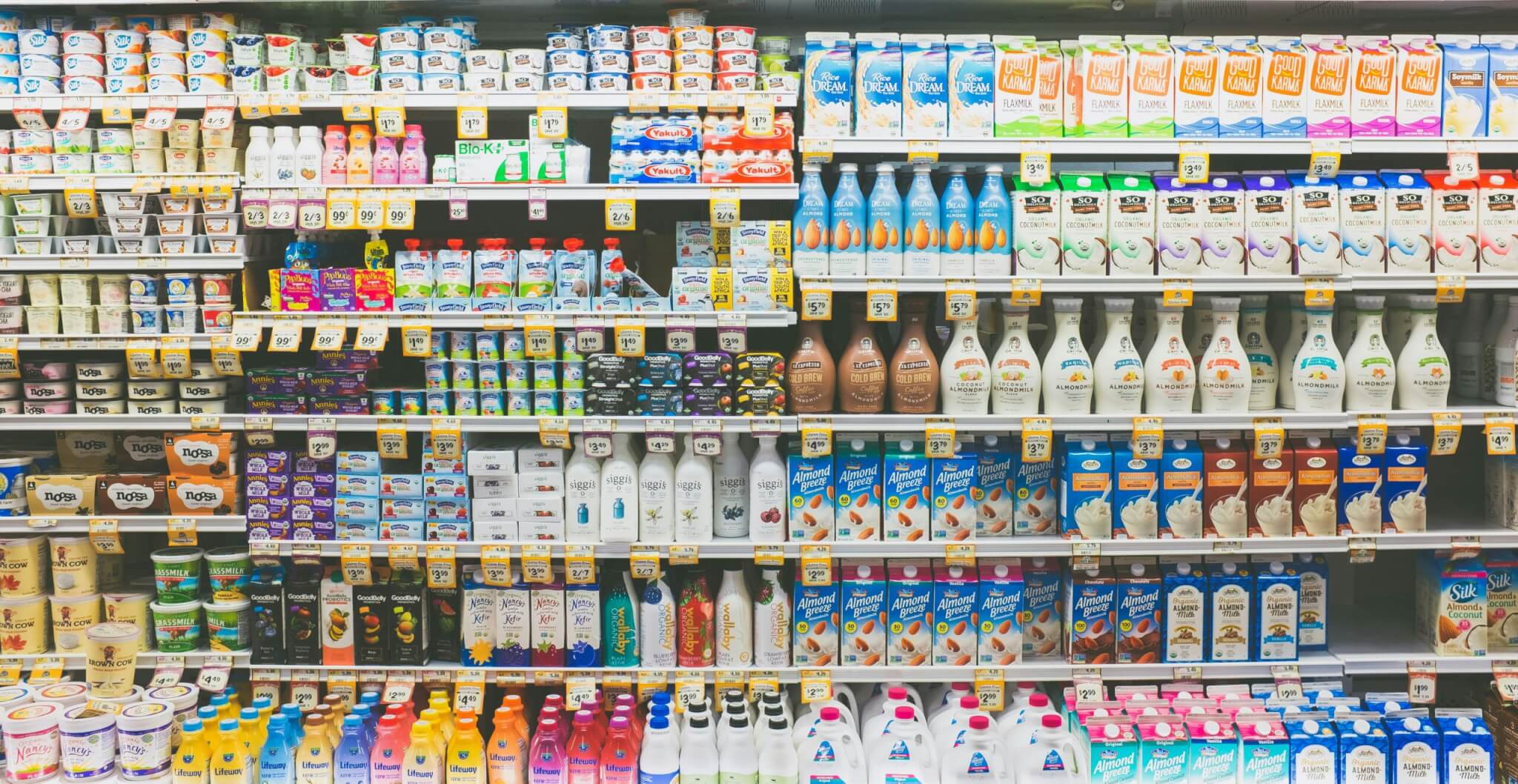
The world’s big meat and dairy companies are often called out for their greenwashing, but just how pervasive has it become?
This is the question academics at the University of Miami in the US have tried to answer. Because these mega meat and dairy companies are responsible for significant greenhouse gas footprints, links to widespread environmental pollution, and mostly focused on the production of intensively-reared, lowest cost meat and dairy – and more of it.
Indeed, the five largest emitters have a combined carbon footprint that is higher than some of the biggest individual fossil fuel companies. JBS, the largest livestock producer in the world, has a larger carbon footprint than Italy.
“Over the past 50 years, many meat and dairy companies have shifted from small-scale farms to consolidated, large, intensified animal agriculture operations,” the academics noted in their paper for the journal Plos Climate. “[…] we examined the largest global meat and dairy companies’ environmental claims [and] assessed these environmental claims […] to distinguish genuine efforts from greenwashing.”
Carbon con
The team pored over the sustainability reports and websites of 33 of the world’s largest animal agriculture businesses – including JBS, Tyson Foods, Arla Foods, Cargill, Nestlé and ABP Food Group, the largest beef processor in the UK and Ireland.
They found a total of 1,233 environmental claims were made between 2021 and 2024. And of all those claims, 98% (1,213) could be categorised as ‘greenwashing’. In other words, the claims made things appear “environmentally friendly but have little meaningful impact” in reality.
But here is the real kicker: though the other 20 claims (2%) did not contain any indication of greenwashing, they were “generally neutral and verifiable” but did not emphasise any particular initiative. An example is: “In the United States alone, 30-40% of food produced is never consumed,” which is a statement supported by the US Department of Agriculture but tells us very little about what the company reporting this is doing (if anything) to reduce its own food waste.
So, the team found next to no genuine green claims i.e. those detailing what these companies are actually doing to reduce their environmental impact – in all the reports and across all the websites they looked at.
“Rather than pursuing transformative change, many companies appear to prioritise minor efficiency gains and heavily publicise small-scale or pilot initiatives that do little to impact the broader environmental footprint of animal agriculture,” the team wrote.
Future fudge
One of the classic tricks is to make promises about the future, but have no plans in place to meet them. Future claims, like meeting net-zero emissions by 2050, made up more than a third (38%) of the claims; most of those were related to climate change.
“[…] when so much of what these companies say seem to be empty promises that are not backed up with evidence or investments, it starts to look more like a public relations exercise rather than caring for the planet,” says Jennifer Jacquet, a Professor of Environmental Science and Policy at the University of Miami, and corresponding author on the study.
In 2024, the meatpacker JBS USA, was sued for advertising that the group would reach net-zero greenhouse gas emissions by 2040, despite having no plan to actually achieve it. In November last year, the New York Attorney General Letitia James agreed a $1.1million settlement with the company, which also agreed to reform its environmental marketing practices and report annually to the Office of the Attorney General (OAG) for three years.
Mighty Earth has also sued JBS USA in Washington, D.C., in a similar ongoing case for alleged false and misleading statements that JBS will be net-zero by 2040. We now need JBS to go all the way and drop all its false and misleading net zero climate claims across its entire global portfolio,” says the NGO’s senior director for investigations and law, Alex Wijeratna.
The US academics picked out some of JBS’s claims in their paper too. The $86 billion company for example included a footnote to its net-zero environmental commitment that “whether the company is successful in achieving this very ambitious goal will depend on numerous factors outside the company’s control”.
There are also examples of meat and dairy companies responsible for huge amounts of methane, in particular, cutting a little plastic from their packaging here and there, and big pushes around regenerative agriculture pilots that cover a tiny (tiny) fraction of a company’s overall emissions.
These are global companies so we are also exposed to this greenwashing. Previous research by the likes of Changing Markets Foundation here in the UK shows the flood of false green claims being made by large meat and dairy companies – including in their advertising and on packaging where there is at least some policing of what is being written.
Meat sold by JBS through its subsidiaries Moy Park and Pilgrim’s UK can be found in many supermarket chains like Tesco and Asda as well as fast food outlets like McDonald’s, KFC and Nando’s.
Maya Bach, a graduate student in the University of Miami’s Rosenstiel School’s Department of Environmental Science and Policy and lead author of the US study, says: “Greenwashing was rampant in the sustainability reports of the world’s largest meat and dairy companies, which can create the illusion of climate progress. We are concerned that these claims can mislead the public, influence consumers, and reduce pressure on policymakers to take climate action,” she adds.
Research by Friends of the Earth in October showed JBS, Marfrig, Tyson, Minerva, and Cargill emitted an estimated 496MtCO2e (496 million tonnes of greenhouse gases in 2023), more than reported for Chevron, Shell, or BP.
As Shefali Sharma, global agriculture policy expert for Greenpeace Germany, explains: “[…] scientists are clear that a failure to bring down agricultural emissions will torpedo us well past the Paris 1.5°C red line. Farms that restore nature and communities, not corporate-controlled factories, should be at the center of our food system.”



0 Comments