

This week, a cautionary tale about cheap chicken, and specifically, cheap chicken from Poland. Unknown to many, the Eastern European country is a powerhouse of poultry production and is Europe’s largest exporter of chicken meat and other poultry items. It’s also the third largest exporter in the world, only surpassed in scale by Brazil and the US.
Indeed, Poland produces more than 20% of all chickens in the European Union, meaning that every fifth chicken on an EU table originates from a Polish farm, according to some estimates. In 2024, some 2 million tons of meat, with an estimated value of 5 billion Euros, was exported, mainly to Germany, France, the Netherlands, and the UK.
In the UK, Polish chicken, as well as turkey meat and eggs, find their way into supermarkets, fast food outlets and all manner of other retail and catering supply chains. What happens on Polish poultry farms, and indeed elsewhere along the production chain – during transport to slaughter, at abattoirs and processing and packing plants, for example – therefore matters. It matters particularly to those of us who might enjoy the odd Friday-night meal of fried chicken after the pub, or have a freezer stuffed full of chicken goujons, nuggets, or other frozen poultry “convenience foods” – handy when feeding the kids after school on a busy work and school night.
Superbug outbreaks
But know this. In 2024 – in a letter that was sent to both the European Commission and Poland’s chief veterinary inspectorate – UK officials stated they were concerned about the failure to tackle the disease in contaminated meat and eggs exported to the UK. “Owing to the significant public health risks, we are considering the options available to us to protect UK consumers,” the Food Standards Agency (FSA) then-chief executive Emily Miles and the UK’s chief vet, Christine Middlemiss wrote. They said they would consider potential “safeguard measures on affected products”.
The letter highlighted a disturbing rise in salmonella cases linked to Polish poultry and listed six outbreaks that had resulted in more than 2500 human infections as well as several deaths.
The intervention came less than a year after an investigation had linked a specific Polish chicken producer that supplied UK supermarkets to the spread of antibiotic-resistant infections. Indeed, some of the salmonella strains found to be responsible for the wave of illnesses being recorded in the UK were resistant to antibiotics classified as “critically important” to human health by the World Health Organization (WHO).
Such “superbugs”, as they are known, can make serious cases of food poisoning harder to treat. Some of the bacteria found in infected Polish chicken were resistant to a particular drug, ciprofloxacin, which is commonly used to treat serious cases – meaning that the medication could not kill the salmonella bacteria.
Salmonella resistant to further types of antibiotics was linked to a separate UK outbreak in 2023, this time involving Polish eggs. At least 65 people fell sick as a result, many of them customers at a single restaurant. In this case, an official investigation later found that some of the victims – who included a six-year-old – reported symptoms including vomiting, diarrhoea, fever and abdominal pain. Ten people were hospitalised and nearly 50 were forced to seek medical attention.
Government failings
In the wake of these outbreaks, the UK government did not implement a ban on any poultry products from implicated farms. It subsequently emerged that they had allowed food companies behind some of the salmonella outbreaks to continue supplying supermarkets even after contaminated meat had been implicated in the deaths of four people and poisoned hundreds more.
This was just one in a catalogue of failings uncovered in relation to the UK’s handling of the issue. Last year, it also emerged that diseased chicken from Poland had entered the UK after post-Brexit delays to border checks, with health chiefs privately admitting that a lack of border inspections in the wake of the UK’s departure from the EU left British consumers exposed to diseased meat. This particular disclosure was part of a wider pattern of concerns that have been raised around the effectiveness of the UK’s borders in preventing diseased foodstuffs and farm animals getting into the country.
Worryingly, Poland’s salmonella problem is ongoing and appears to be far from resolved.
EU enforcement data reviewed by the AGtivist this week has shown that in 2026 to date, at least 107 separate consignments of Polish poultry (mostly exported) were tested and found to be contaminated with some type of salmonella.
This figure includes at least 14 cases where the contaminated items had either already been imported and distributed within the UK, or were destined for the UK market.
By comparison, in 2025 overall, testing showed that there were 165 consignments of Polish poultry found to be infected with salmonella, including 25 loads bound for the UK.
The contaminated foods identified in these periods included frozen and fresh chicken (and turkey, and goose) meat, as well as drumsticks, fillets, wings, mince and kebab joints, amongst other items.
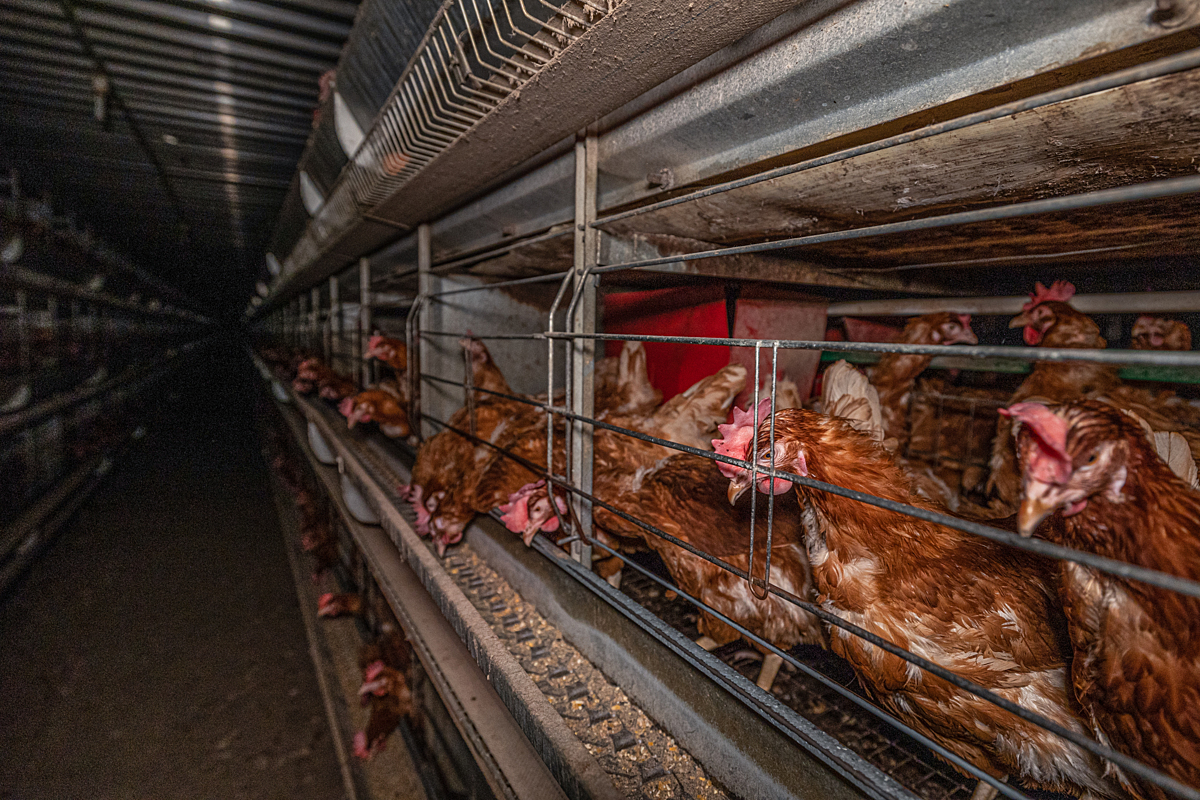
These unsavoury findings ultimately point towards practices on Poland’s poultry farms and at other stages of production. Bacteria such as salmonella are found in the guts of birds and can easily spread on farms, particularly where there are unhygienic or overcrowded conditions, before going on to infect the wider supply chain via transport and during slaughter and processing activities.
As the AGtivist has reported before, the use and overuse of antibiotics on farms enables bacteria such as salmonella (but also other nasties such as campylobacter and e.coli) to develop drug resistance. Antibiotic use in Polish livestock production – including on chicken and other poultry farms – has been a major cause for concern in recent years, with increases recorded in usage of some types of drugs important for humans.
Of course, the same problem affects poultry elsewhere: UK chicken meat has been found to be infected with antibiotic resistant diseases for example, but Poland’s track record around the issue is particularly poor, despite some improvements in practices and monitoring in recent years.
Both the Polish government and poultry industry have defended the country’s standards and ability to control diseases, with Poland’s Chief Veterinary Inspectorate previously saying that it adheres to EU regulations with respect to salmonella and antimicrobial resistance, and that it cooperated with the UK authorities on food poisoning investigations.
Ghost farms
But it’s not just food safety concerns that are entwined with the trade in Polish poultry. A recent investigation suggested that almost half of the country’s 2,000 largest poultry farms were running without the correct permits needed to control pollution and other environmental impacts.
Research found that hundreds of Polish poultry farmers running facilities with 40,000 or more birds were operating without licenses required under EU law in an apparent effort to avoid red tape and rigorous inspections.
This situation risks serious environmental breaches – such as water and air pollution – and other rule-breaking going undetected, with major health risks for communities living near these farms
The investigation highlighted the case of an 11-month-old child, who was left fighting for his life after he contracted an antibiotic-resistant infection. He was one of several children who fell ill in a town in eastern Poland where residents alleged the water supply had been contaminated by a nearby turkey farm. The farm in question had operated without a licence for years, and was found at one point to be stocking almost twice as many birds as it was licensed for.
In response to the findings, the Polish government launched an investigation, with Poland’s Chief Inspectorate for Environmental Protection requesting that all regional inspectors verify records on the number of industrial-scale poultry farms that require a particular permit.
The checks are understood to be ongoing but what they apparently found in the interim was shocking: in one major poultry-producing region as many as 80% of the farms operating without a permit were large enough to to require one, suggesting a huge regulatory oversight had occurred.
The revelations prompted parliamentary questions in Brussels and political scrutiny inside Poland itself. The European Commission itself did not rule out the possibility of proceedings against Poland in response to the issue. “Member States must ensure that EU law is implemented, correctly and in a timely manner,” an EC spokesperson said, adding that the Commission “may launch infringement procedures when this is not the case.”
Poland’s national poultry council, KRD-IG, later stated in some media reports that the scandal amounted to “unfounded claims” and that it “doesn’t recognise itself in articles published in the media… concerning alleged ‘ghost poultry farms’ in Poland.” The body stated that the findings “clearly diverge from the truth and from the realities of how the poultry sector operates.”
“The Polish poultry sector constitutes one of the pillars of the country’s food security and of food exports within the EU, and operates under one of the most stringent regulatory systems in the world,” it said.
It added that all farms are subject to mandatory registration, remain under continuous veterinary supervision, and operate within a supply chain that requires full traceability of production, from the farm through to the processing plant and the final market.
Reassuring words. But with a track record as patchy as that of Poland’s poultry industry, we’d be forgiven for being sceptical. And perhaps that Friday night fried chicken “treat” feels a little less appetising.






0 Comments